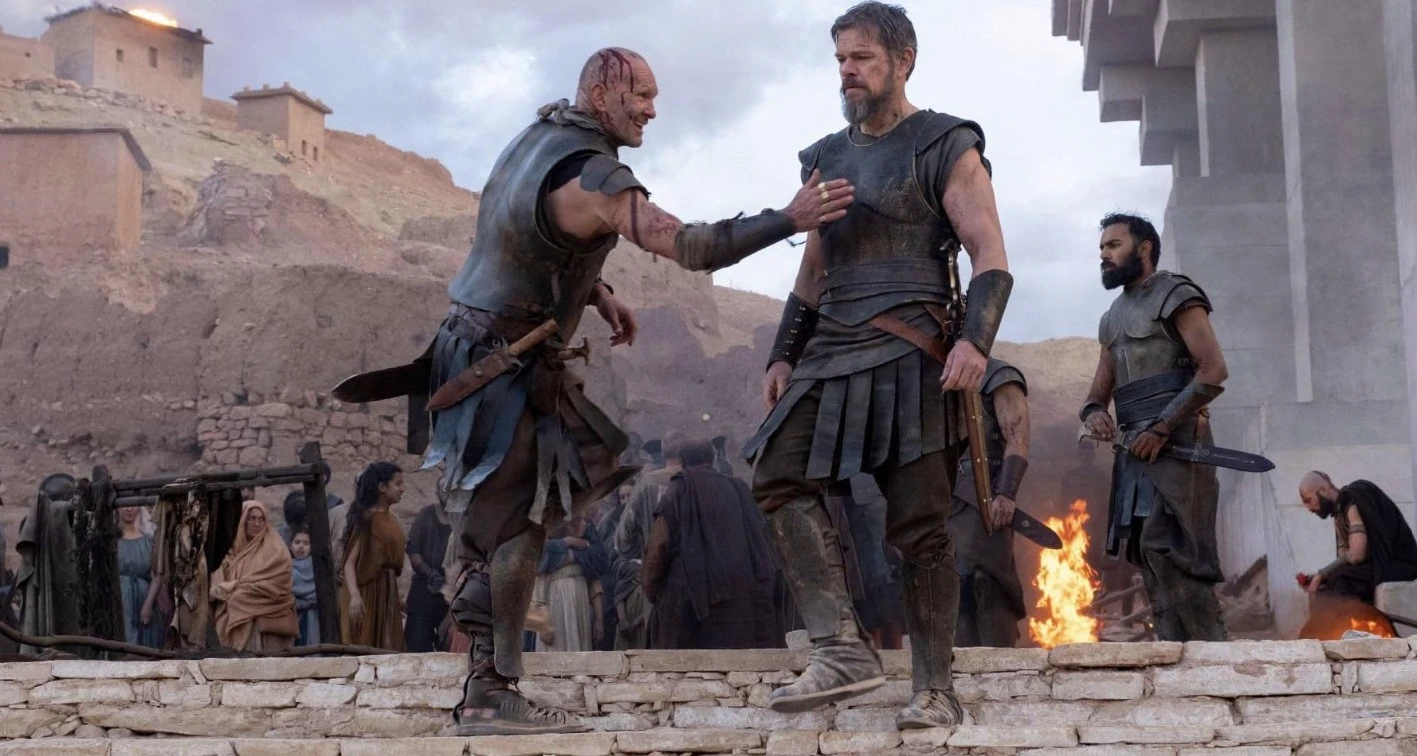
Christopher Nolan’s The Odyssey is released on July 17, 2026, with Matt Damon as Odysseus, Anne Hathaway as Penelope, and Tom Holland as Telemachus. The production shot across six countries and territories over a 91-day schedule: Morocco, Greece, Italy, Iceland, Scotland, and the United States. None of these locations sit near the historical Troy in northwestern Turkey. Nolan built his war-torn city, his island kingdom, and his coastal fortresses out of existing structures scattered across the Mediterranean and beyond.
This article examines major filming locations of The Odyssey through multiple architectural ideas, including siege, maritime defense, elevated power, and memory.
Architecture of Siege
1. Aït Benhaddou, Morocco

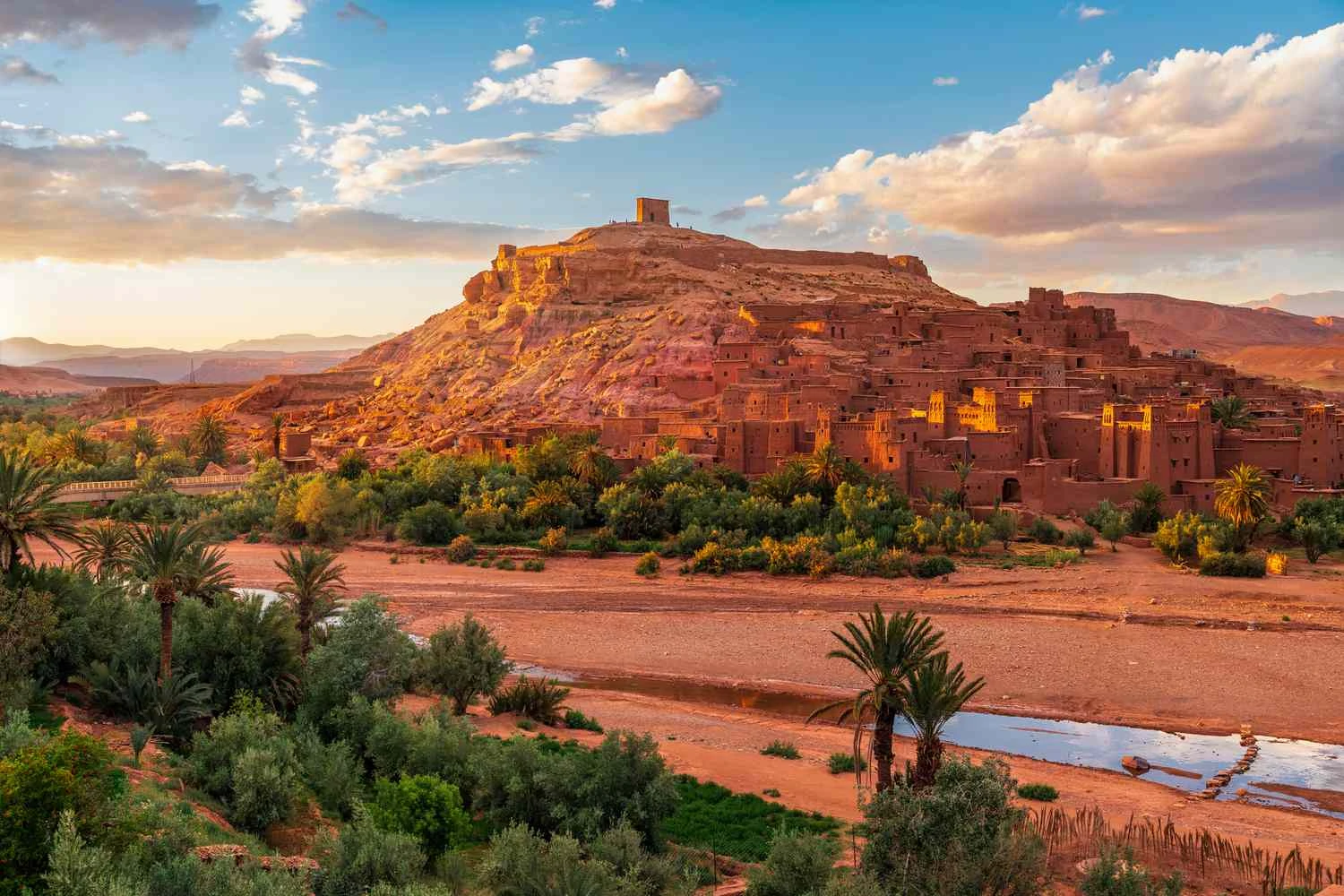
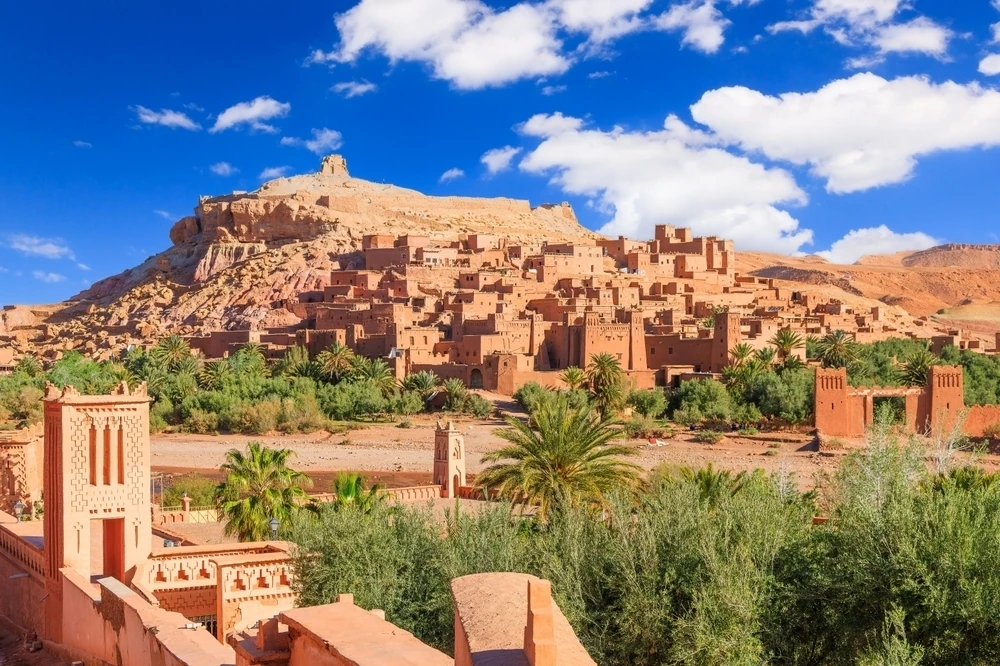
Aït Benhaddou is a 900-year-old ksar near Ouarzazate, reached by a roughly 180 km drive from Marrakech over the Tizi n’Tichka Pass. Once a caravan stop between the Sahara and Marrakech, it was named a UNESCO World Heritage Site in 1987 and has appeared in Lawrence of Arabia, Gladiator, and Game of Thrones. Its walls are built from pisé, rammed earth compacted in wooden forms, which stores heat by day and releases it slowly at night. Tapered corner towers resist seismic stress better than straight walls, and terraced circulation up the hillside turns every path into a chokepoint.

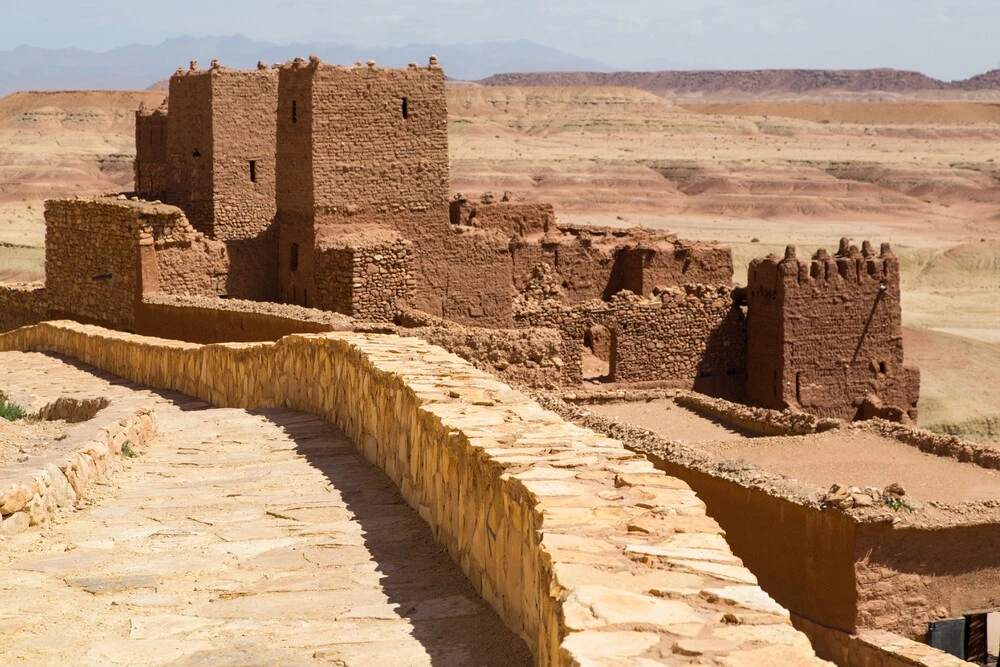
For the Troy sequence, the production added roughly 60 structures, including a pillared “Temple of Athena,” across 2.5 acres, using LED lighting alongside controlled flames to stage the city’s destruction. Nolan opens the film here, at the fall of Troy, and the ksar’s dense, earthbound mass reads on screen as a city built to withstand a decade of siege. Where earlier film versions of Troy leaned on marble and gold, Aït Benhaddou gives the story a city that looks like it was fought over, not just for.
Architecture of Maritime Defense
2. Methoni Castle, Greece

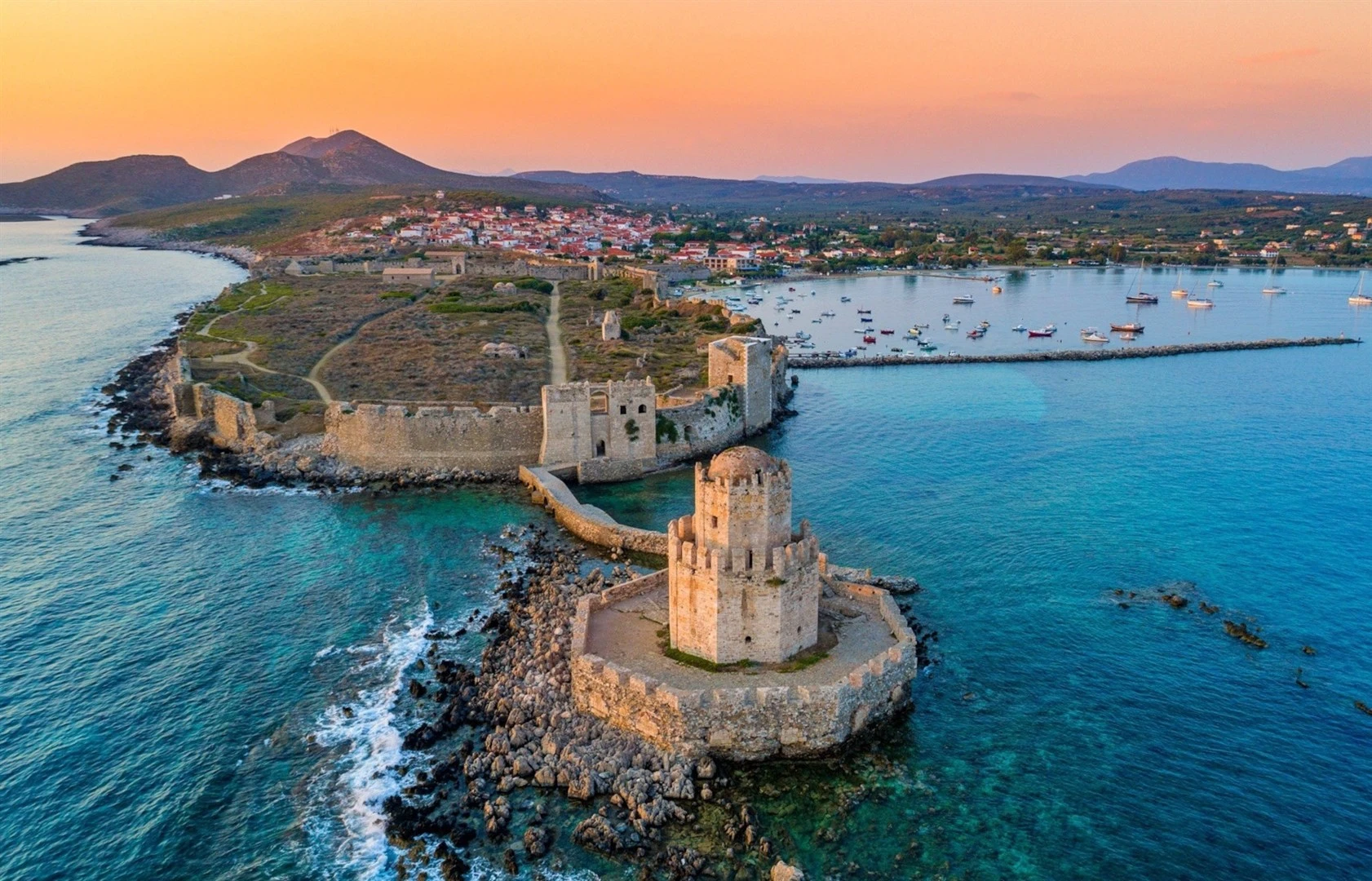
Methoni sits on the southwestern tip of the Peloponnese, its harbor guarded by a castle built under Venetian rule, which held the town from the early 13th century until the Ottoman conquest in 1500. The castle occupies a small peninsula, so open water forms three sides of its perimeter, while a moat and fortified bridge narrow the land approach to one controlled route. A sea gate lets ships dock directly inside the walls, and projecting bastions let defenders fire along adjoining wall faces, closing blind spots a flat wall would leave open.

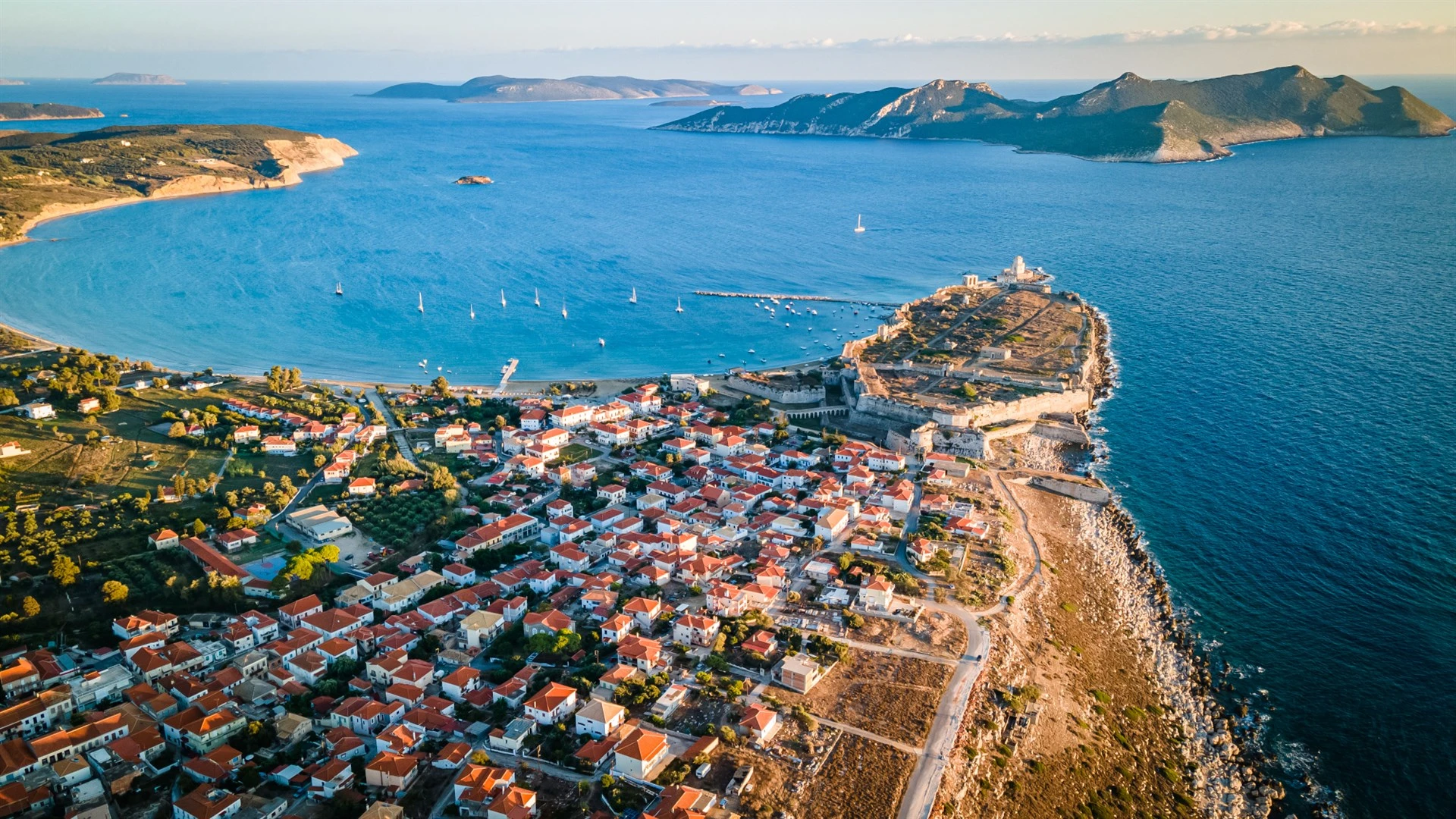
The production used Methoni alongside Pylos, Almyrolakkos beach, and Voidokilia beach during its Peloponnese shoot, which covers the Cyclops sequence and Telemachus’s search for word of his father. The castle’s sea gate and bastions give this stretch of the film a visual language of watched coastlines and controlled harbors, useful for a story where every landfall carries the risk of ambush. Its fortified silhouette anchors the film’s few scenes shot on actual Greek soil, the mythic homeland the rest of the story is trying to reach.
3. Essaouira Ramparts, Morocco

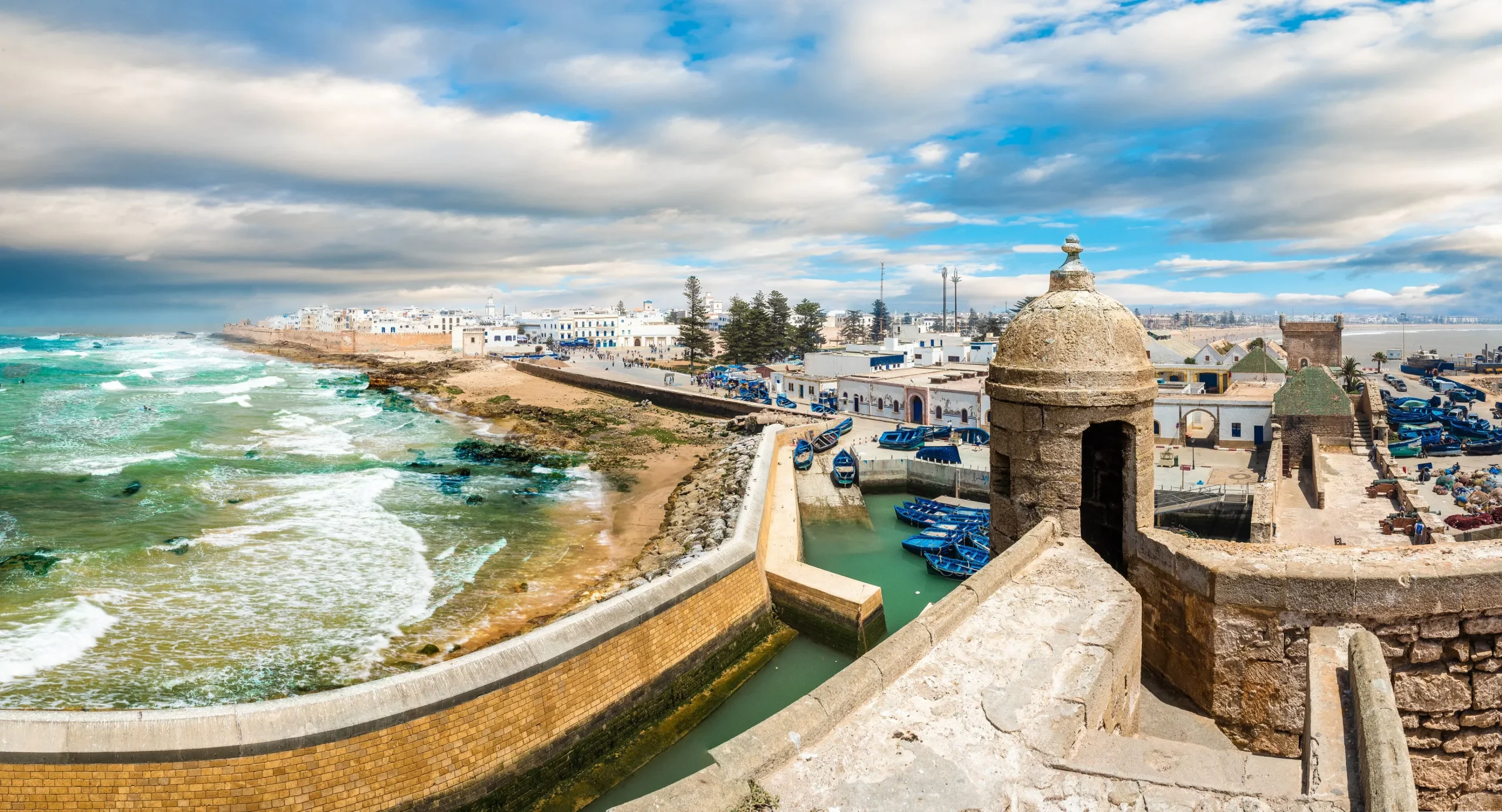
Essaouira was rebuilt in the 18th century under Sultan Mohammed III, who commissioned French engineer Théodore Cornut to lay out the town using European fortification methods. Its ramparts, known locally as the Skala de la Ville, carry cannon platforms angled toward the harbor entrance, the town’s real point of vulnerability to a hostile fleet. Their thick, low profile was built to absorb artillery fire rather than simply block foot soldiers, setting them apart from older medieval walls built before gunpowder changed siege warfare.

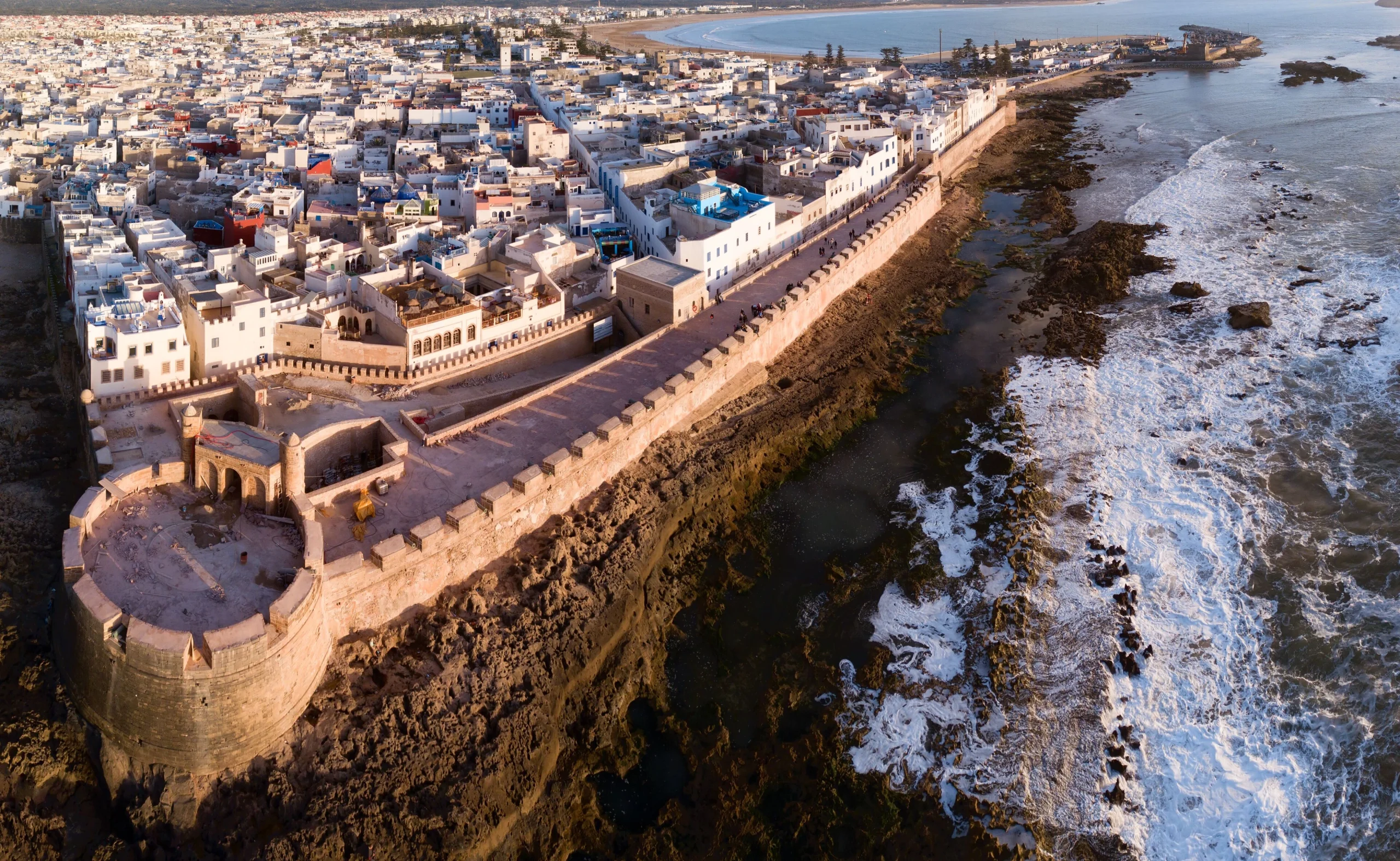
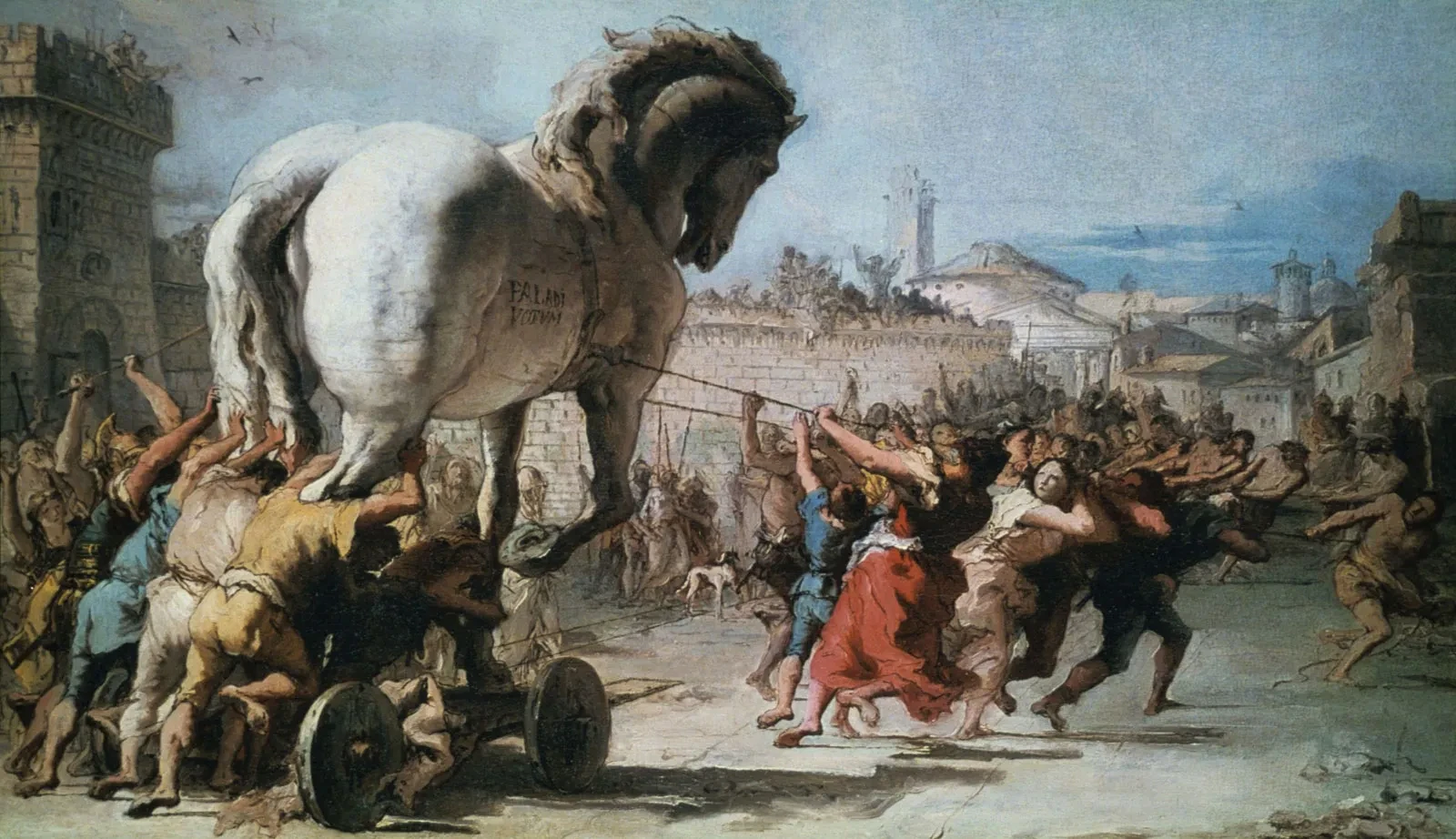
The Atlantic beaches below the ramparts were used for the discovery of the Trojan Horse and the launch of Odysseus’s voyage home, with a 35-foot horse half-buried in the sand for the shoot. The ramparts themselves frame this stretch of coastline as a threshold, the last fortified edge of the war before Odysseus sails into ten years of open water. Shooting against a real defensive wall keeps that transition grounded in a structure with its own history of guarding a coast.
Architecture of Elevated Power
4. Acrocorinth, Greece

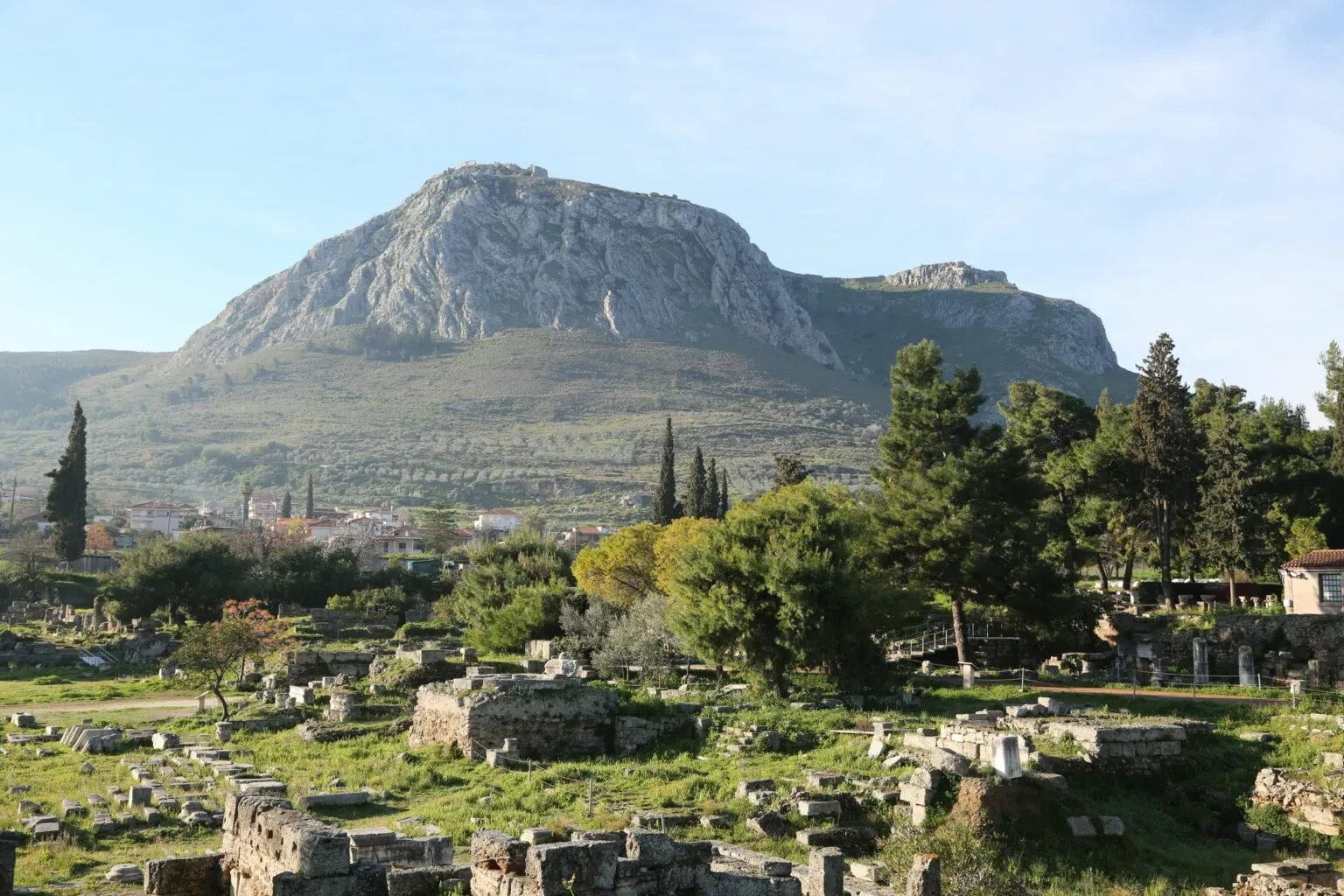
Acrocorinth is the acropolis of ancient Corinth, set on a limestone outcrop above the Corinthian isthmus. Its walls carry additions from Greek, Roman, Byzantine, Frankish, and Ottoman rule, each built on top of the last. The fortification line follows the natural contour of the rock, leaving the steepest cliff faces unwalled since the drop itself served as defense. Three successive gates control the single approach road, each set at a different elevation.

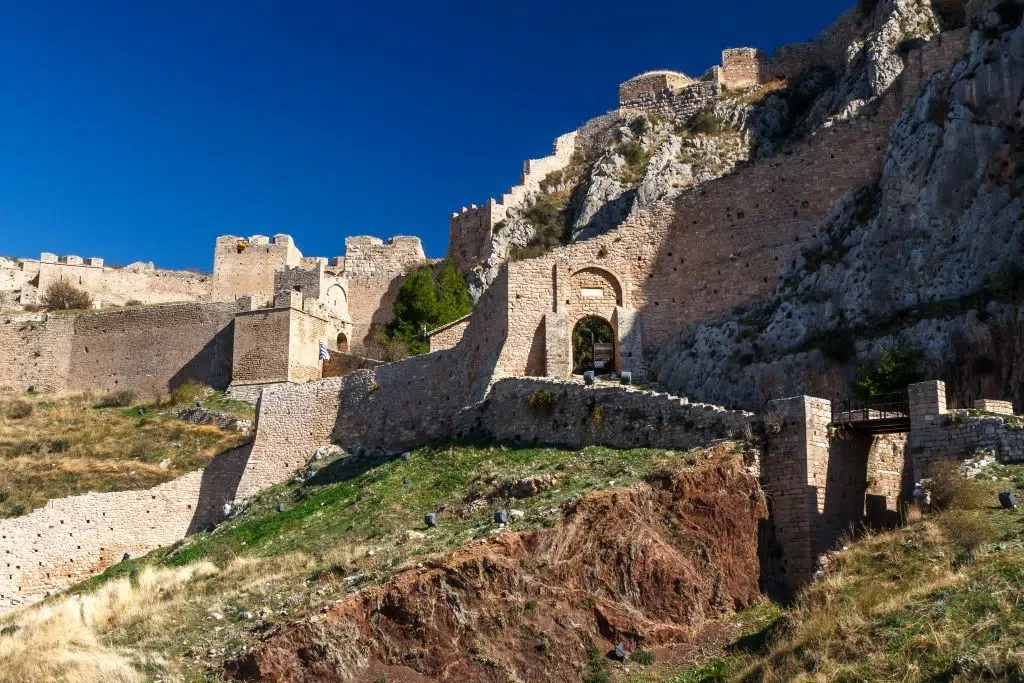
The site doubled for two moments in the film: supporting Peloponnese scenes shot alongside Methoni Castle, and Agamemnon’s homecoming flashback, standing in for the walls of Mycenae. Acrocorinth’s stacked, centuries-deep fortifications give the production a location that visually communicates power accumulated over time, useful for a king returning to a household that has turned against him.
5. Castello di Santa Caterina, Sicily

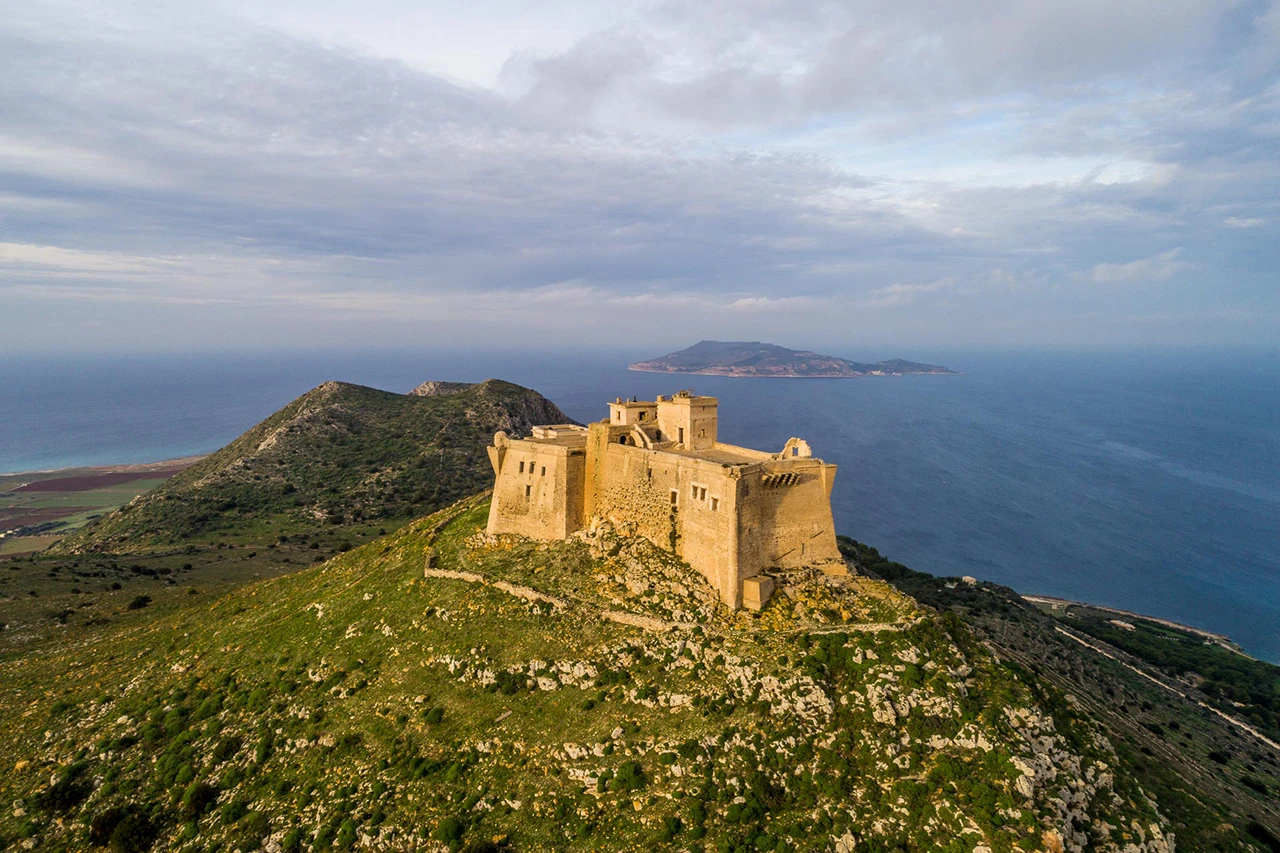
This 15th-century fortress sits atop Monte Santa Caterina on Favignana, roughly 310 meters above the sea, and passed through Saracen and Norman control before serving as a Bourbon-era prison for political convicts. It has no road to the summit, and from it the entire Egadi archipelago and a wide stretch of Sicilian coastline are visible. The difficult climb was itself a historical defensive feature: a fortress that is hard to reach is hard to besiege.

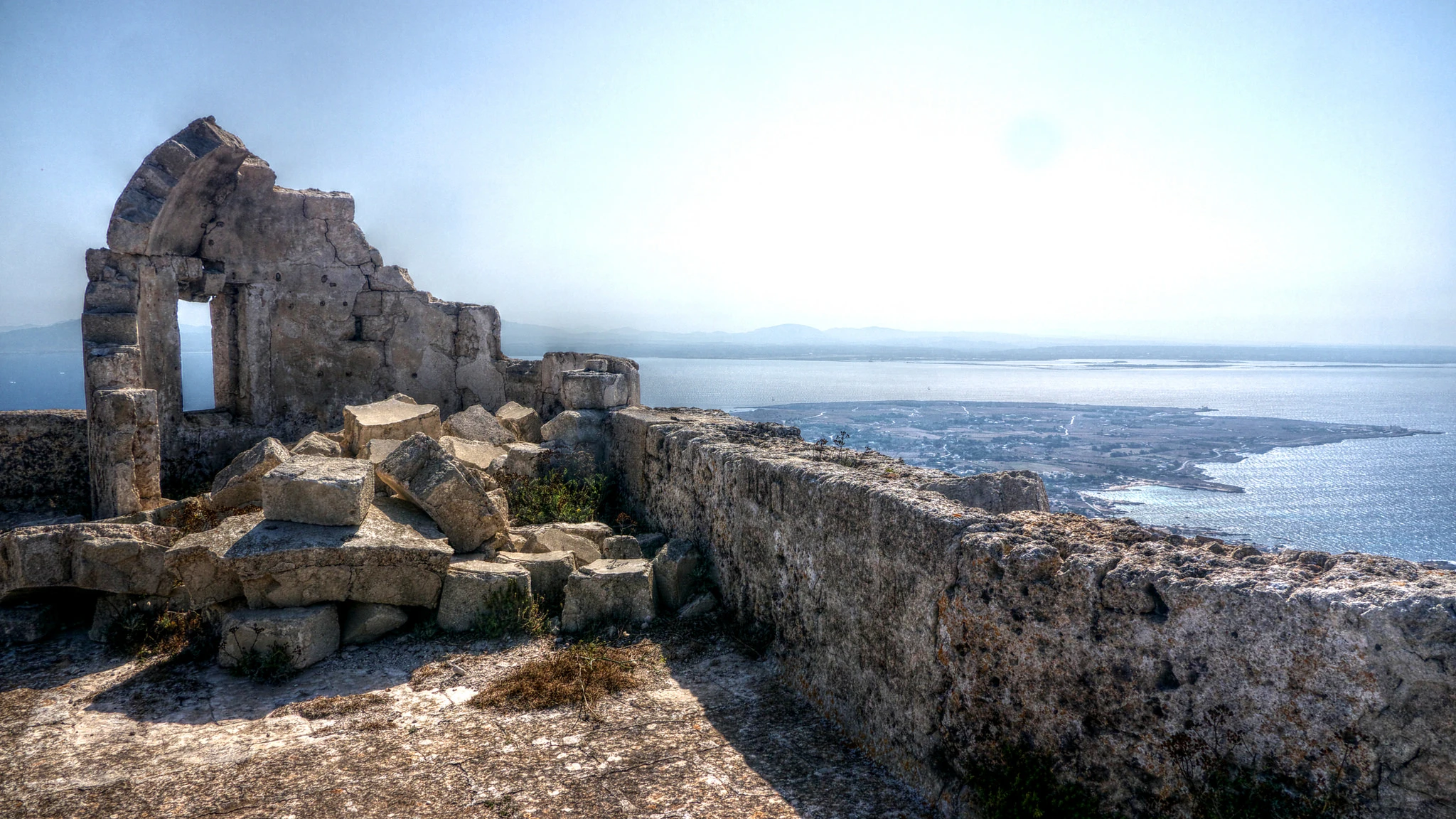
The castle stood in as the exterior of the Ithacan palace, with interiors built on a Los Angeles soundstage, while cast and crew hiked up daily and equipment moved by helicopter during the shoot. On screen, the fortress plays the seat of a kingdom under siege from within, as Penelope and Telemachus hold out against the suitors occupying their home. Its isolation and commanding view suit a household waiting and watching for a king who has not returned.
6. Findlater Castle, Scotland

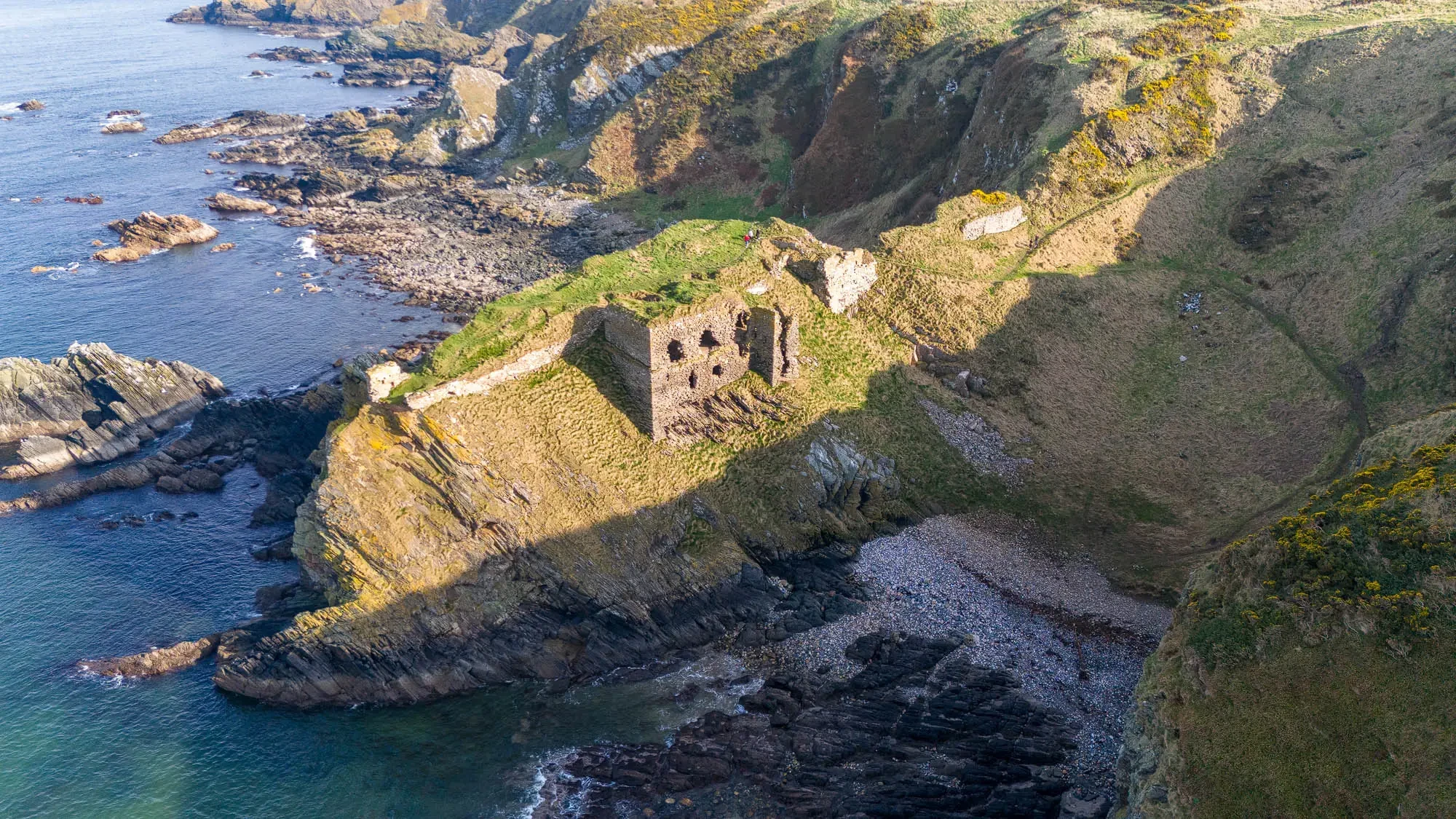
Findlater Castle is a 14th-century ruin on Scotland’s Moray coast, sitting on a rocky promontory roughly 50 feet above the Moray Firth. Once the seat of the Earls of Findlater and Seafield, it survives today as a protected scheduled monument, with no safe public access into the structure itself. The castle’s position on an exposed, wave-cut headland left it fully open to North Sea weather, a siting choice that prioritized visibility and defense over comfort or ease of building.

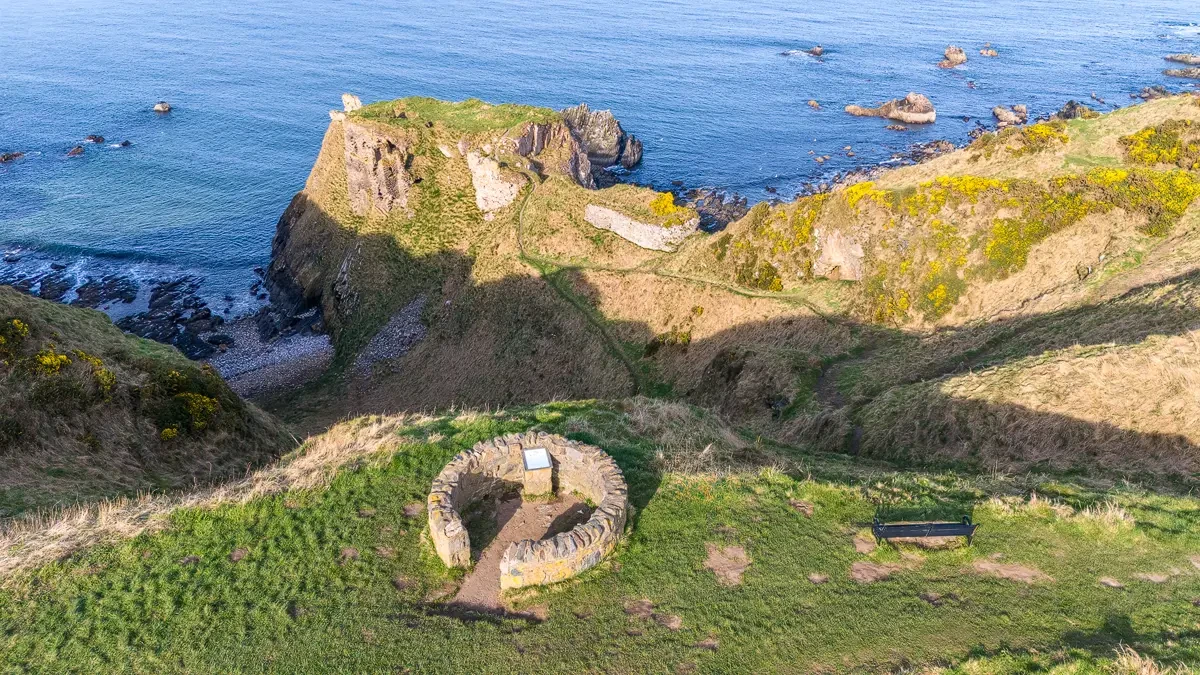
The ruin was used for the film’s sequence on the island of Aeaea, home to the sorceress Circe, where she turns Odysseus’s crew into pigs. Its crumbling walls and sheer drop into the sea give the location an isolation that a built set would struggle to match, standing in for an island the story describes as cut off from the rest of the world. The castle’s real disrepair works in the film’s favor, reading as a place abandoned by everyone except the one figure who chose to live there.
Architecture of Memory
7. Lipari Citadel, Aeolian Islands
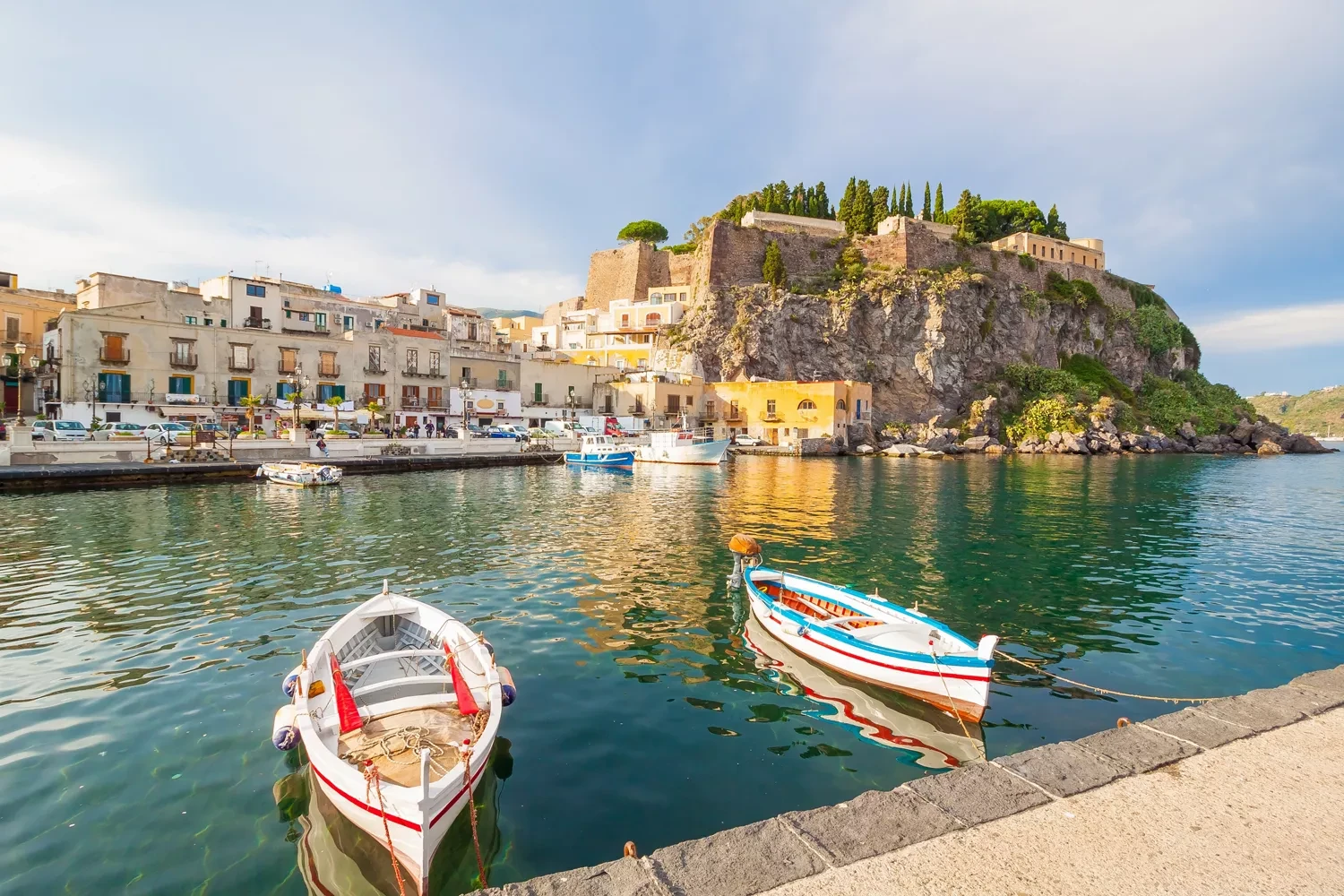
Lipari’s citadel sits on a fortified acropolis that has been continuously occupied for roughly 6,000 years, with Greek, Roman, Norman, and Spanish builders each adding their own layer of wall on top of what came before. The site’s Spanish-built ramparts, raised in the 16th century, now enclose an archaeological museum displaying pottery, theatrical masks, and other finds pulled directly from the ground beneath the citadel walls.

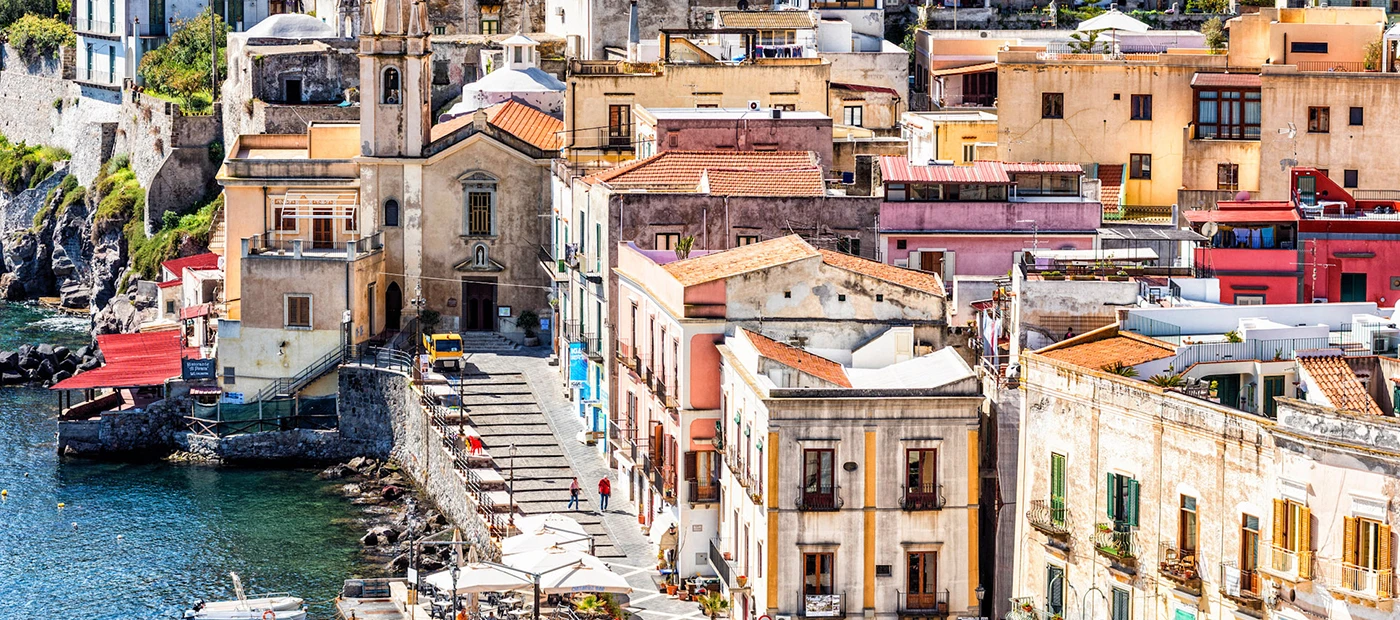
Lipari and the neighboring islands of Vulcano and Basiluzzo stood in for Aeolia, the floating island home of Aeolus, keeper of the winds, where Odysseus rests before the winds drive him back off course. The choice carries a layer the production didn’t have to invent: Lipari is the same island ancient tradition already identified as Aeolus’s home, so the name “Aeolian Islands” predates the film by well over two thousand years.
8. Troy Museum, Turkey

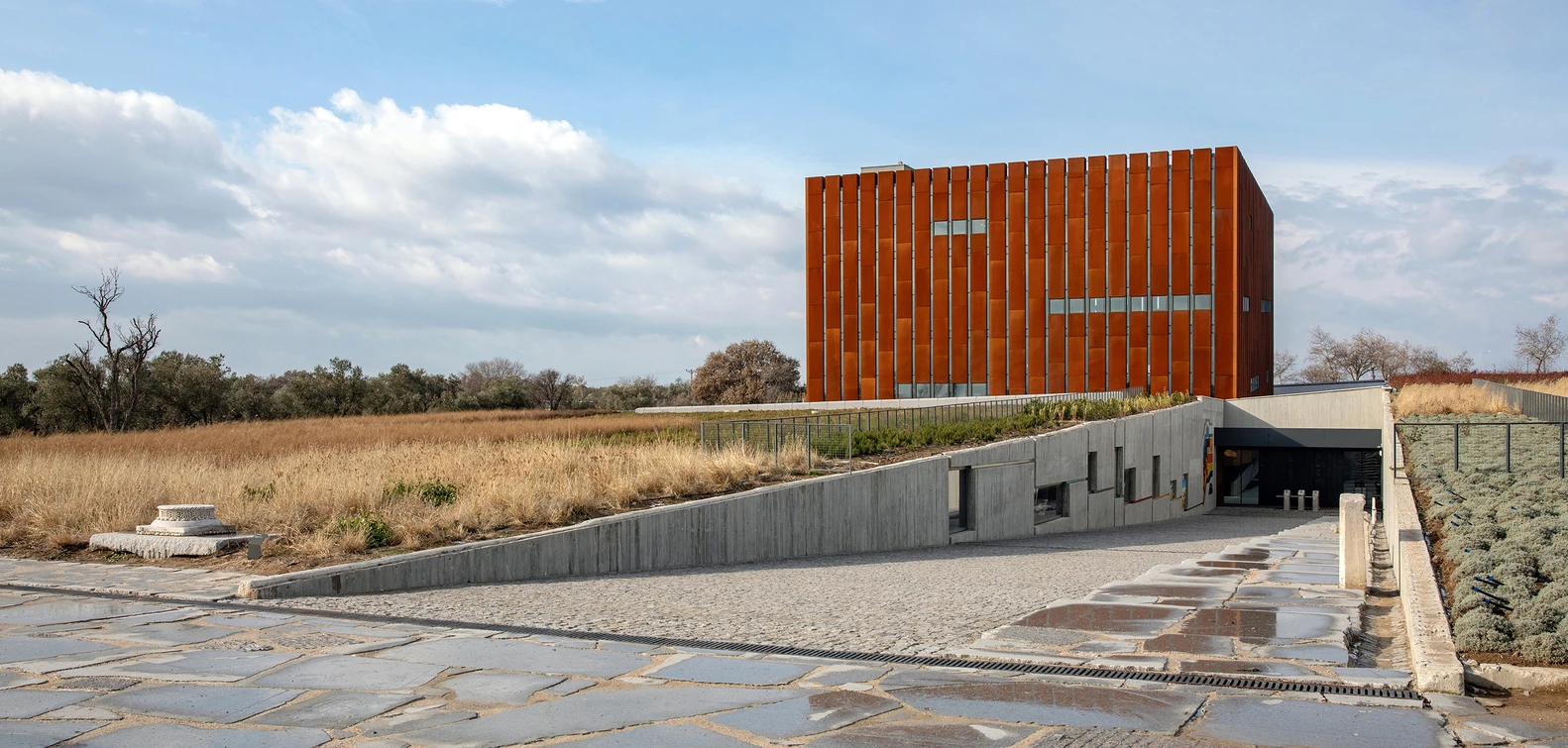
The Troy Museum opened on October 10, 2018, about 800 meters from the excavation site in Tevfikiye, Çanakkale Province, and holds around 2,000 artifacts on display with more than 40,000 in storage. Yalın Architectural Design won the commission through a 2011 national competition. The building takes the form of a 32-by-32-meter cube clad in Corten steel, chosen for the rust-colored patina it develops over time, with its height calibrated to match the pre-excavation elevation of ancient Troy.
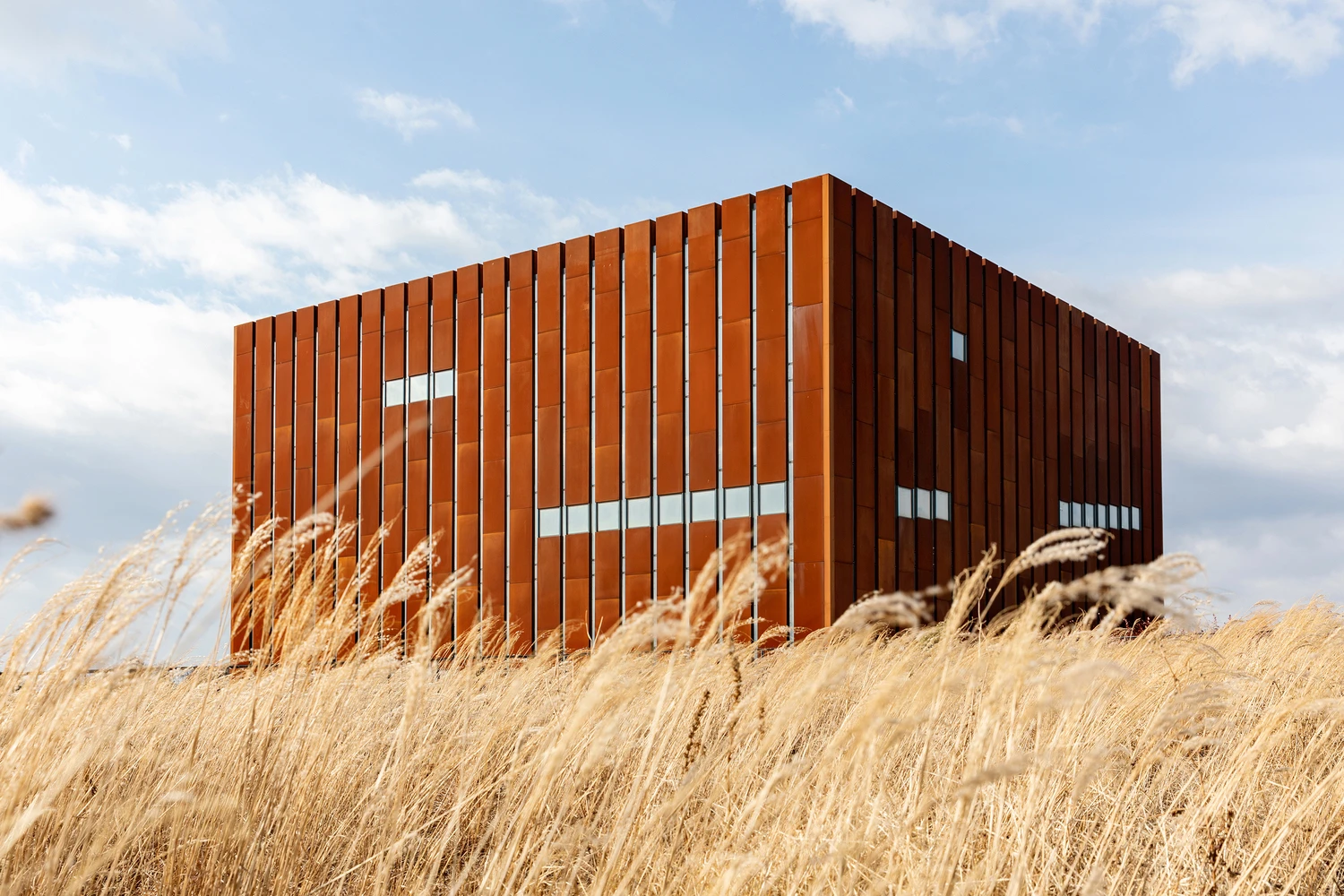
Also outside the film’s shoot map, the museum is the clearest modern counterpoint to what Nolan built in Aït Benhaddou. Where the movie set reconstructs a city whole, the museum’s underground support levels and ramped, four-floor interior are organized entirely around presenting fragments: excavated objects displayed inside a structure shaped like the ground they were pulled from. It is the built record of Troy’s actual afterlife, standing apart from any film’s version of its final night.

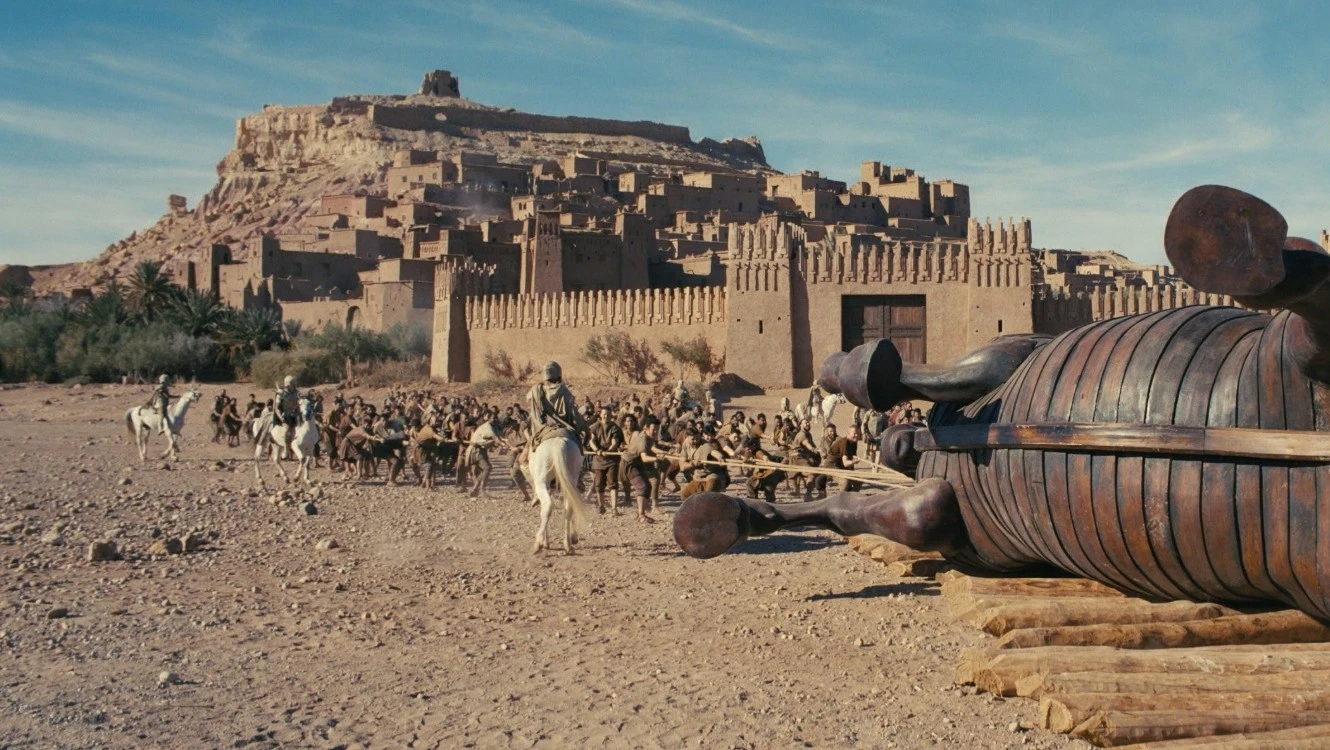
The gap between the film’s shooting locations and Homer’s actual geography is wide by design. Nolan’s Troy stands in Morocco. His Ithaca stands on a Sicilian island, the Circe sequence uses a Scottish cliff, and his Cyclops sequence uses Greek soil, but not the coast where ancient Troy actually stood. That gap separates the built environment as a fascinating storytelling tool.