

Close Menu

    Subscribe to Updates

    Get the latest creative news from FooBar about art, design and business.

    What's Hot

    How the Loosdrecht Lakes Became the Netherlands’ Most Fascinating Residential Landscape

    July 31, 2026

    Tashkent’s Modernist Architecture Joins UNESCO World Heritage List

    July 31, 2026

    Architecture Is Growing Up with Gen Z

    July 30, 2026
    Facebook X (Twitter) Instagram
    Facebook X (Twitter) Instagram
    ParametricParametric
    Subscribe
    ParametricParametric
    Home»Projects»Design»Fashion»Harvard Unveils Shape-Shifting Knitted Fabric with Built-In Sensors
    Fashion

    Harvard Unveils Shape-Shifting Knitted Fabric with Built-In Sensors

    Isha ChaudharyBy Isha ChaudharyJuly 26, 202604 Mins Read11 Views
    Facebook Twitter Pinterest LinkedIn Tumblr WhatsApp Reddit Email
    Harvard Unveils Shape-Shifting Knitted Fabric with Built-In Sensors
    Shape-Shifting Knitted Fabric
    Share
    Facebook Twitter LinkedIn Pinterest Email

    Researchers at the Harvard John A. Paulson School of Engineering and Applied Sciences (SEAS) have developed a new class of programmable knitted textiles that can switch between multiple stable three-dimensional shapes while also functioning as soft electronic sensors. Created using standard industrial knitting techniques, the material combines mechanical intelligence with embedded conductive yarns, opening new possibilities for wearable technology, responsive products, and interactive textiles.

    The research was led by Kausalya Mahadevan, now a postdoctoral associate in the laboratory of Katia Bertoldi, William and Ami Kuan Danoff Professor of Applied Mechanics at Harvard SEAS. Their findings were published in Advanced Functional Materials.

    Turning Conventional Knitting into Programmable Materials

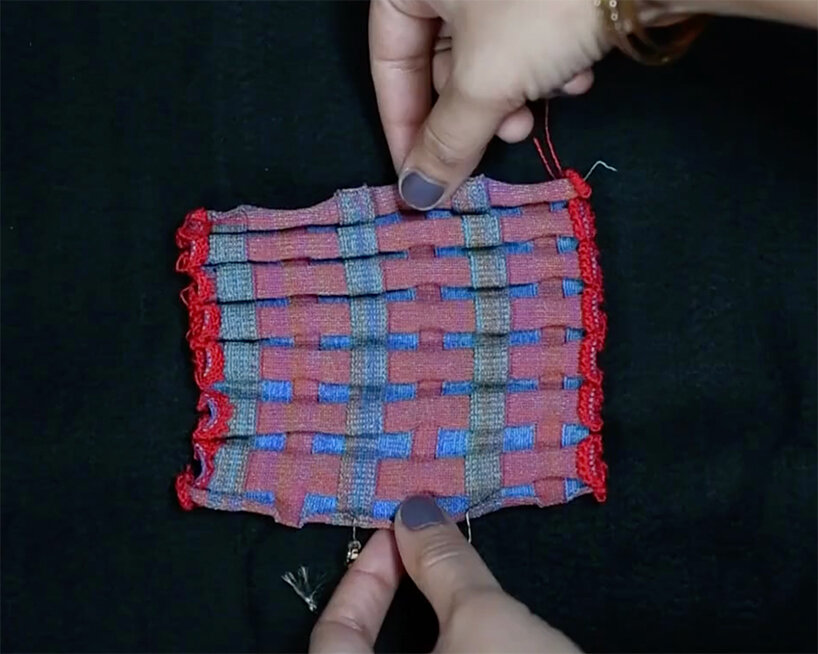
    The team transformed an ordinary weft-knitting process into a manufacturing method for creating textiles with programmable mechanical behavior. Using commercially available industrial knitting machines, they produced dense elastic fabrics that naturally curve into three-dimensional forms after fabrication.
    Harvard Unveils Shape-Shifting Knitted Fabric with Built-In Sensors

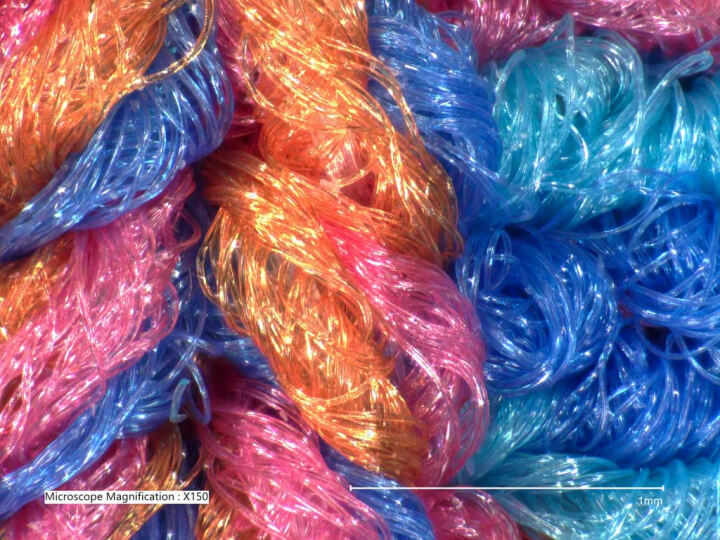
    The shape transformation is driven by internal stresses created during knitting. By carefully selecting highly elastic yarns and employing a knitting technique known as plating, the researchers controlled how different yarns appear on opposite faces of the textile. This arrangement allows the fabric to develop predictable curvatures and maintain several stable configurations without continuous external force.

    Fabrics with Multiple Stable Shapes

    A defining feature of the new textile is multistability, the ability to remain stable in more than one shape.

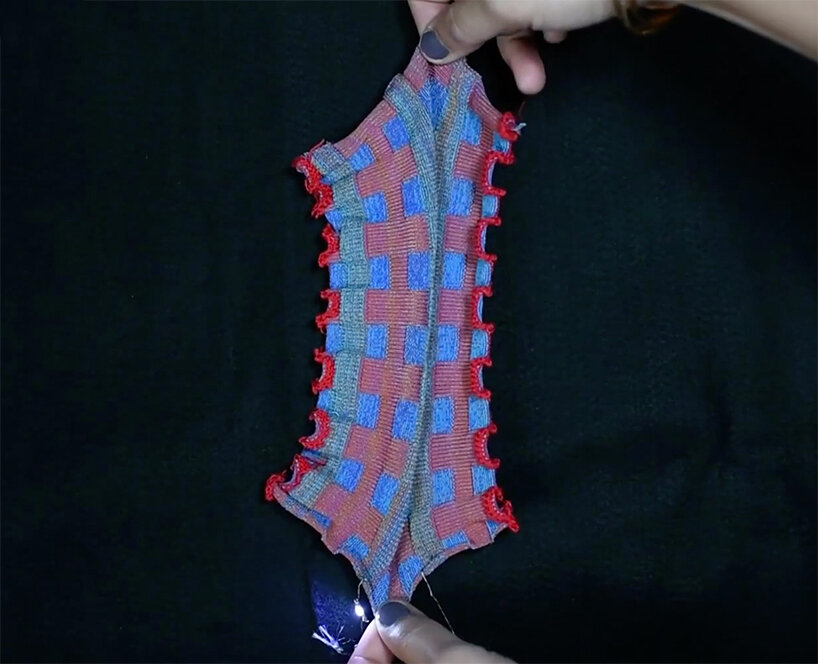
    When pressure is applied, the fabric rapidly snaps from one configuration to another and remains in that position until another force changes it again. This behavior is comparable to the operation of a mechanical switch, providing clear tactile feedback while requiring no motors or complex mechanical assemblies.

    To understand how different patterns affect this behavior, the researchers systematically varied horizontal and vertical knitted structures and analyzed how geometry and material properties influence the snapping response. They also developed computational models capable of accurately predicting the fabric’s mechanical performance without simulating every individual yarn, making future textile design faster and more scalable.
    Harvard Unveils Shape-Shifting Knitted Fabric with Built-In Sensors

    Integrated Conductive Yarns Enable Smart Functions

    Beyond changing shape, the textiles were engineered to perform electrical functions by incorporating fine conductive yarns directly into the knitting process.

    As the fabric snaps between stable configurations, electrical circuits open or close, allowing the textile to operate as a soft switch or motion sensor. Since the sensing capability is integrated into the knitted structure itself, the system avoids bulky rigid electronic components while maintaining flexibility and comfort.

    Demonstrated Applications

    The Harvard team showcased several working prototypes that demonstrate the versatility of the technology.

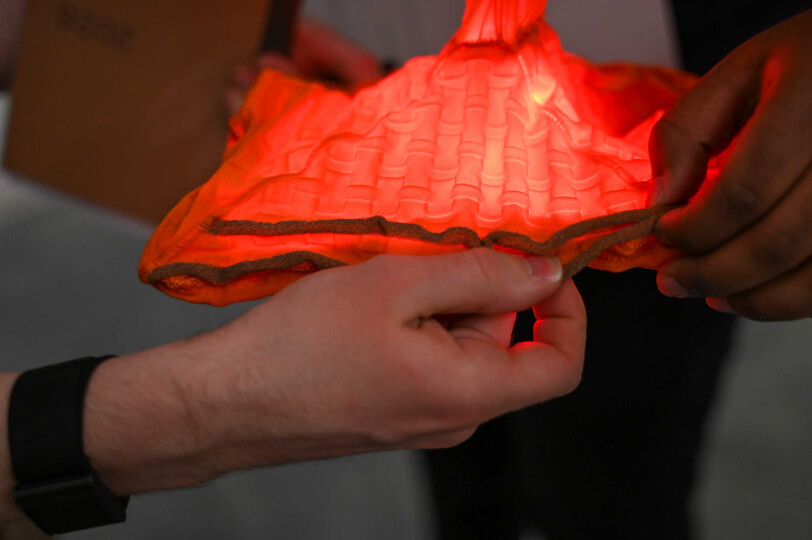
    One prototype used a multistable knitted shell to switch an LED light on and off whenever the fabric changed shape. Another created a wearable textile switch positioned over the knee or elbow that detected snapping movements and transmitted signals to an Arduino microcontroller for step counting and movement tracking.

    The researchers also designed a reconfigurable knitted lampshade featuring three independent textile switches, each controlling a different colored light as the fabric stretched and snapped between configurations.
    Harvard Unveils Shape-Shifting Knitted Fabric with Built-In Sensors

    Manufacturing with Existing Textile Infrastructure

    A significant advantage of the research is its compatibility with existing textile manufacturing.

    The fabrics were produced using industrial double-bed weft-knitting machines commonly used in garment production, suggesting that the technology can be scaled without requiring entirely new manufacturing systems. This compatibility could accelerate the adoption of programmable textiles across consumer products and wearable devices.

    Future Potential for Wearable Technology and Adaptive Design

    The researchers see broad opportunities for multistable textiles in applications that require lightweight, flexible, and interactive materials.

    Potential future uses include wearable health monitoring systems, motion-sensitive clothing, tactile human-machine interfaces, adaptive furniture, responsive architectural installations, and smart interiors capable of changing configuration while remaining entirely textile-based. The work also advances the growing field of mechanical metamaterials by demonstrating how textile structures can be engineered to perform complex mechanical and sensing functions through geometry alone.

    Credit: Harvard University

    Shape-Shifting Knitted Fabric
    Harvard Knitted Fabric Wearable Technology
    Share. Facebook Twitter Pinterest LinkedIn Tumblr Email
    Isha Chaudhary

    Isha Chaudhary is an architecture writer who follows and writes about current trends and emerging discussions in architecture, with a focus on design, technology, and place-making.

    Related Posts

    This Robotic Clothing Wraps Around You in Just 10 Seconds

    July 19, 2026

    Paris Haute Couture Didn’t Expect Temple Architecture to Steal the Show

    July 15, 2026

    Iris van Herpen Unveils the World’s First Plasma-Powered Couture Dress at Paris Couture Week

    July 11, 2026
    Add A Comment
    Leave A Reply Cancel Reply

    Demo
    Top Posts

    FIFA World Cup 2030 Stadium Guide

    July 26, 202612 Views

    Harvard Unveils Shape-Shifting Knitted Fabric with Built-In Sensors

    July 26, 202611 Views

    How the Loosdrecht Lakes Became the Netherlands’ Most Fascinating Residential Landscape

    July 31, 20263 Views

    Why Clearing the Room First Changes Every Renovation Decision You Make

    July 27, 20263 Views
    Don't Miss

    How the Loosdrecht Lakes Became the Netherlands’ Most Fascinating Residential Landscape

    By Isha ChaudharyJuly 31, 2026

    What appears to be an AI-generated landscape has become one of the internet’s latest architectural…

    Tashkent’s Modernist Architecture Joins UNESCO World Heritage List

    July 31, 2026

    Architecture Is Growing Up with Gen Z

    July 30, 2026

    Populous to Shape Frankfurt’s Next Major Sports and Entertainment Arena

    July 30, 2026

    Subscribe to Updates

    Get the latest creative news from SmartMag about art & design.

    Demo

    Recent Posts

    • How the Loosdrecht Lakes Became the Netherlands’ Most Fascinating Residential Landscape
    • Tashkent’s Modernist Architecture Joins UNESCO World Heritage List
    • Architecture Is Growing Up with Gen Z
    • Populous to Shape Frankfurt’s Next Major Sports and Entertainment Arena
    • Chile’s 2026 National Architecture Prize Awarded to Pritzker Laureates Alejandro Aravena and Smiljan Radić

    Recent Comments

    No comments to show.
    About Us
    About Us

    Your source for the lifestyle news. This demo is crafted specifically to exhibit the use of the theme as a lifestyle site. Visit our main page for more demos.

    We're accepting new partnerships right now.

    Email Us: [email protected]
    Contact: +1-320-0123-451

    Our Picks

    How the Loosdrecht Lakes Became the Netherlands’ Most Fascinating Residential Landscape

    July 31, 2026

    Tashkent’s Modernist Architecture Joins UNESCO World Heritage List

    July 31, 2026

    Architecture Is Growing Up with Gen Z

    July 30, 2026
    Most Popular

    FIFA World Cup 2030 Stadium Guide

    July 26, 202612 Views

    Harvard Unveils Shape-Shifting Knitted Fabric with Built-In Sensors

    July 26, 202611 Views

    How the Loosdrecht Lakes Became the Netherlands’ Most Fascinating Residential Landscape

    July 31, 20263 Views

    Archives

    • July 2026
    • June 2026
    • May 2026
    • April 2026
    • March 2026
    • February 2026
    • January 2026
    • December 2025
    • November 2025
    • October 2025
    • September 2025
    • August 2025
    • July 2025
    • June 2025
    • May 2025
    • April 2025
    • March 2025
    • February 2025
    • January 2025
    • December 2024
    • November 2024
    • October 2024
    • September 2024
    • August 2024
    • July 2024
    • June 2024
    • May 2024
    • April 2024
    • March 2024
    • February 2024
    • January 2024
    • December 2023
    • November 2023
    • October 2023
    • September 2023
    • August 2023
    • July 2023
    • June 2023
    • May 2023
    • April 2023
    • March 2023
    • February 2023
    • January 2023
    • December 2022
    • November 2022
    • October 2022
    • September 2022
    • August 2022
    • July 2022
    • June 2022
    • May 2022
    • April 2022
    • March 2022
    • February 2022
    • January 2022
    • December 2021
    • November 2021
    • October 2021
    • September 2021
    • August 2021
    • July 2021
    • June 2021
    • May 2021
    • April 2021
    • March 2021
    • February 2021
    • January 2021
    • December 2020
    • November 2020
    • October 2020
    • September 2020
    • August 2020
    • July 2020
    • June 2020
    • May 2020
    • April 2020
    • March 2020
    • February 2020
    • January 2020
    • November 2019
    • October 2019
    • September 2019
    • August 2019
    • July 2019
    • June 2019
    • May 2019
    • April 2019
    • March 2019
    • February 2019
    • January 2019
    • December 2018
    • November 2018
    • October 2018
    • September 2018
    • August 2018

    Categories

    • 3D Printing
    • Ads
    • Archipreneurs
    • Architects
    • Architecture
    • Architecture & Design
    • Architecture News
    • Articles
    • Artificial Intelligence
    • BIM / AEC
    • Books
    • Case Study
    • CDNext
    • CDNEXT Recordings
    • City Guide
    • Competitions
    • Design
    • Digital Art
    • Digital Members
    • Events
    • Fashion
    • Geography
    • Installation
    • Interior
    • Interviews
    • Jobs
    • landscape
    • Landscape Architecture
    • Landscape Design
    • memorial
    • Metaverse
    • Opinions
    • PA Quotes
    • PA Talks
    • PAACADEMY
    • Pavilion
    • podcasts
    • Products
    • Projects
    • Robotics
    • Space Architecture
    • Studio Recordings
    • Studio Workshops
    • Sustainability
    • Technology
    • Tools
    • Urbanism
    • Videos
    • Workshops
    Facebook X (Twitter) Instagram Pinterest Dribbble
    © 2026 ThemeSphere. Designed by ThemeSphere.

    Type above and press Enter to search. Press Esc to cancel.