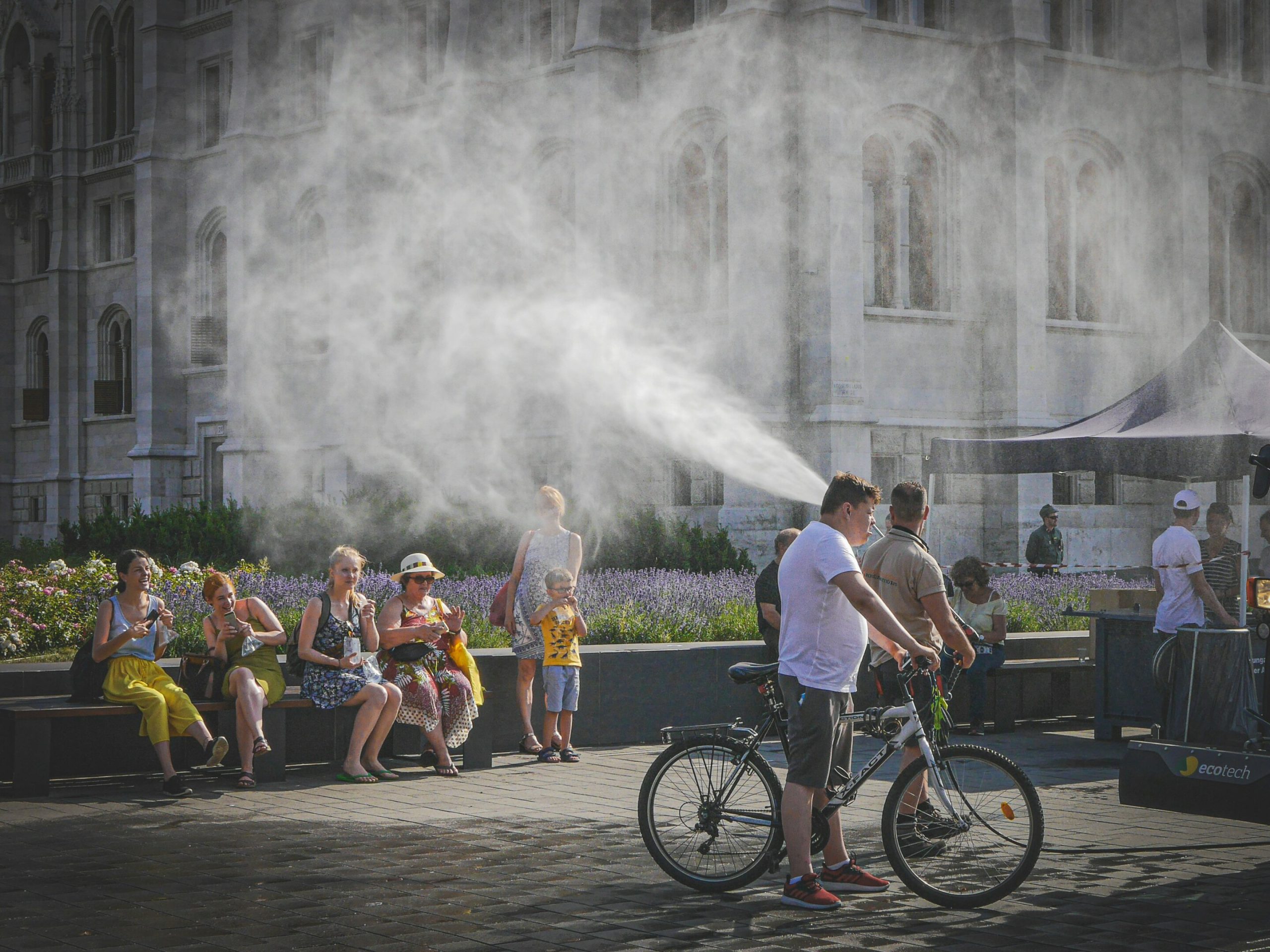
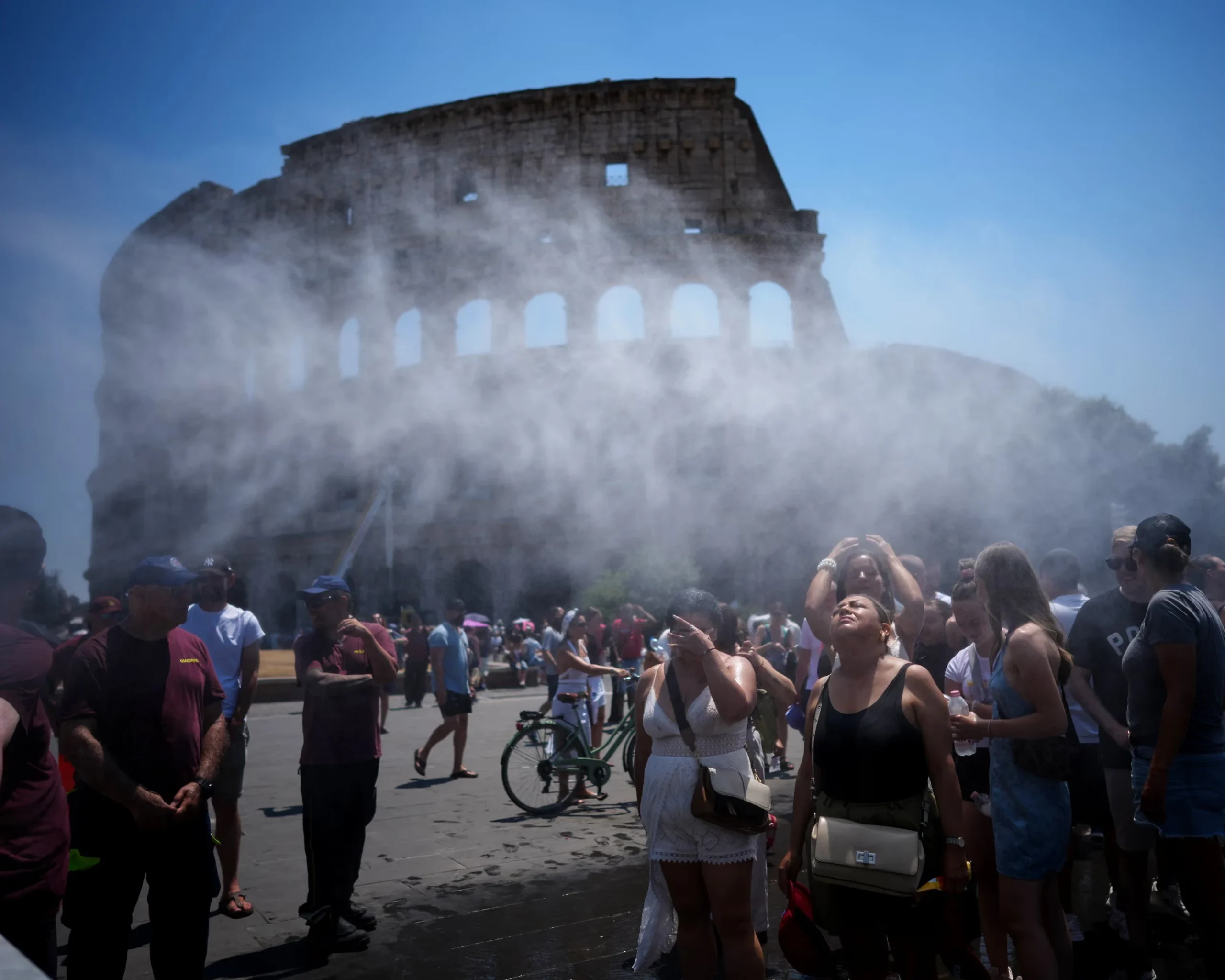
The summer of 2026 laid bare a world structurally unprepared for the disasters it already knows are coming. During the World Cup, Europe’s host cities baked under extreme heat with little more than a shrug from the built environment: public spaces conspicuously devoid of adequate passive cooling or even basic ventilation strategies.
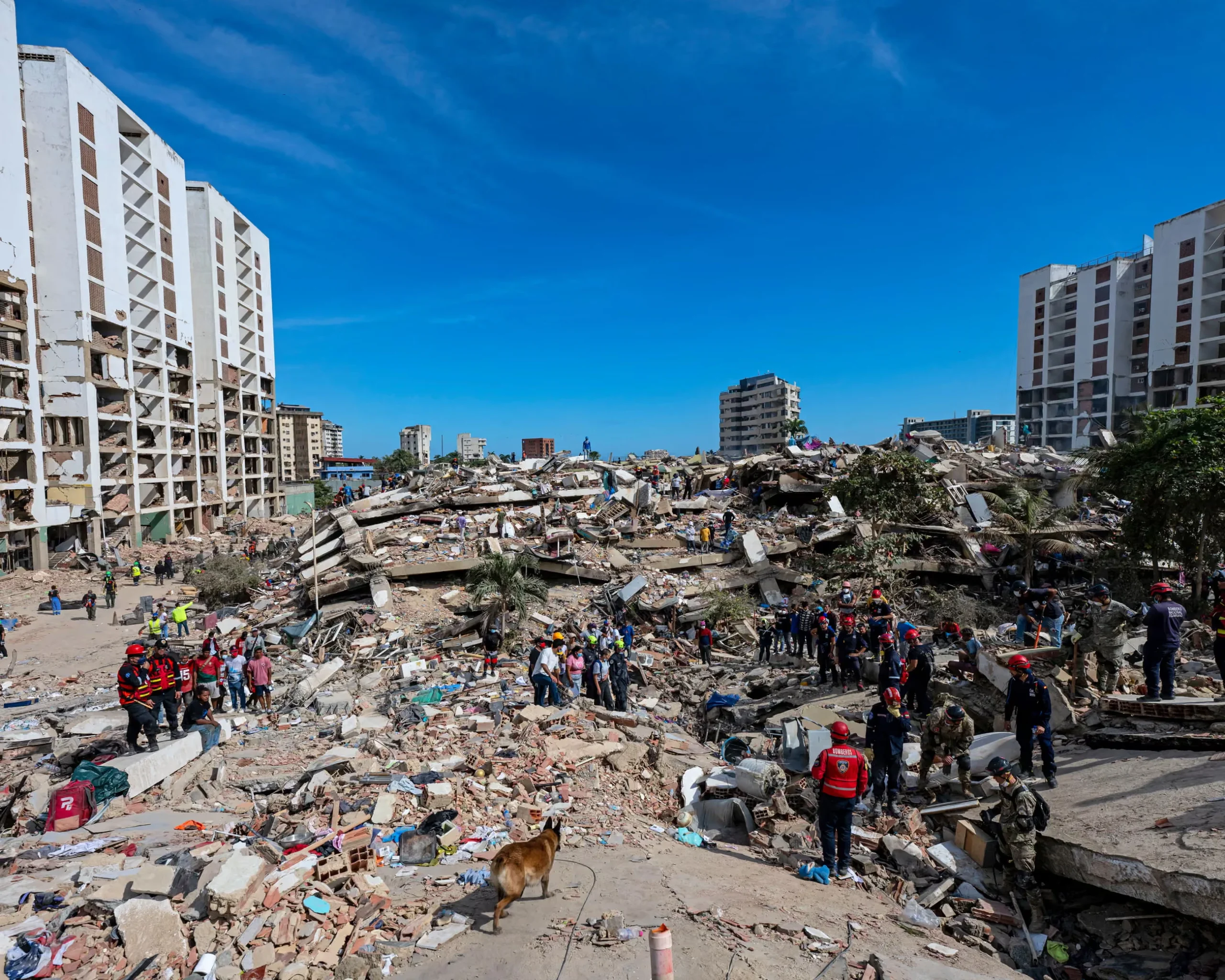
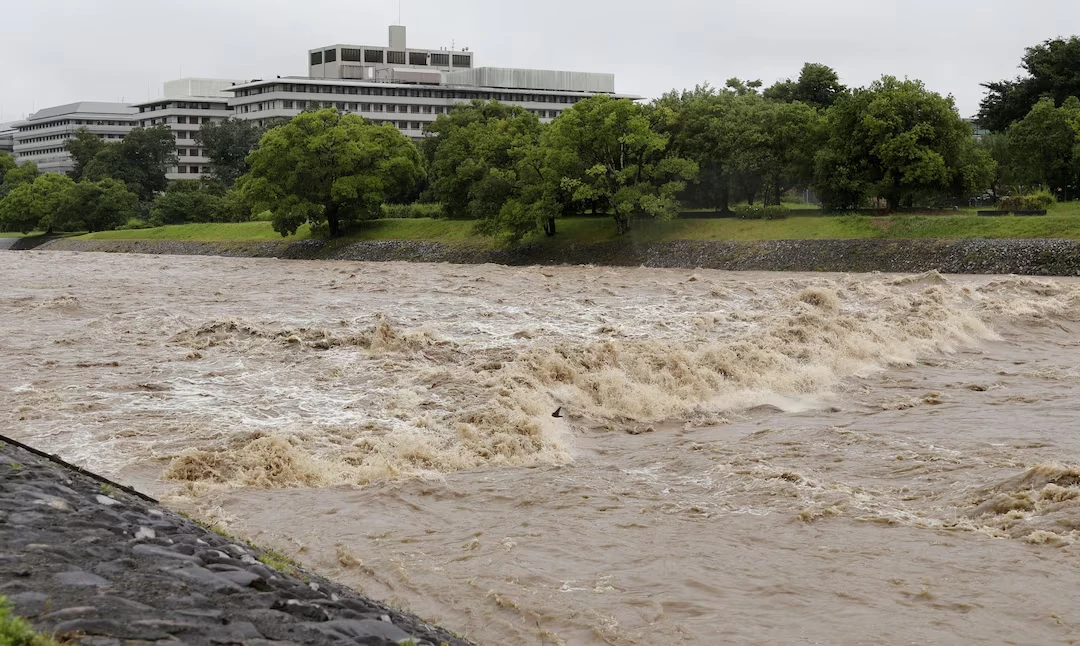
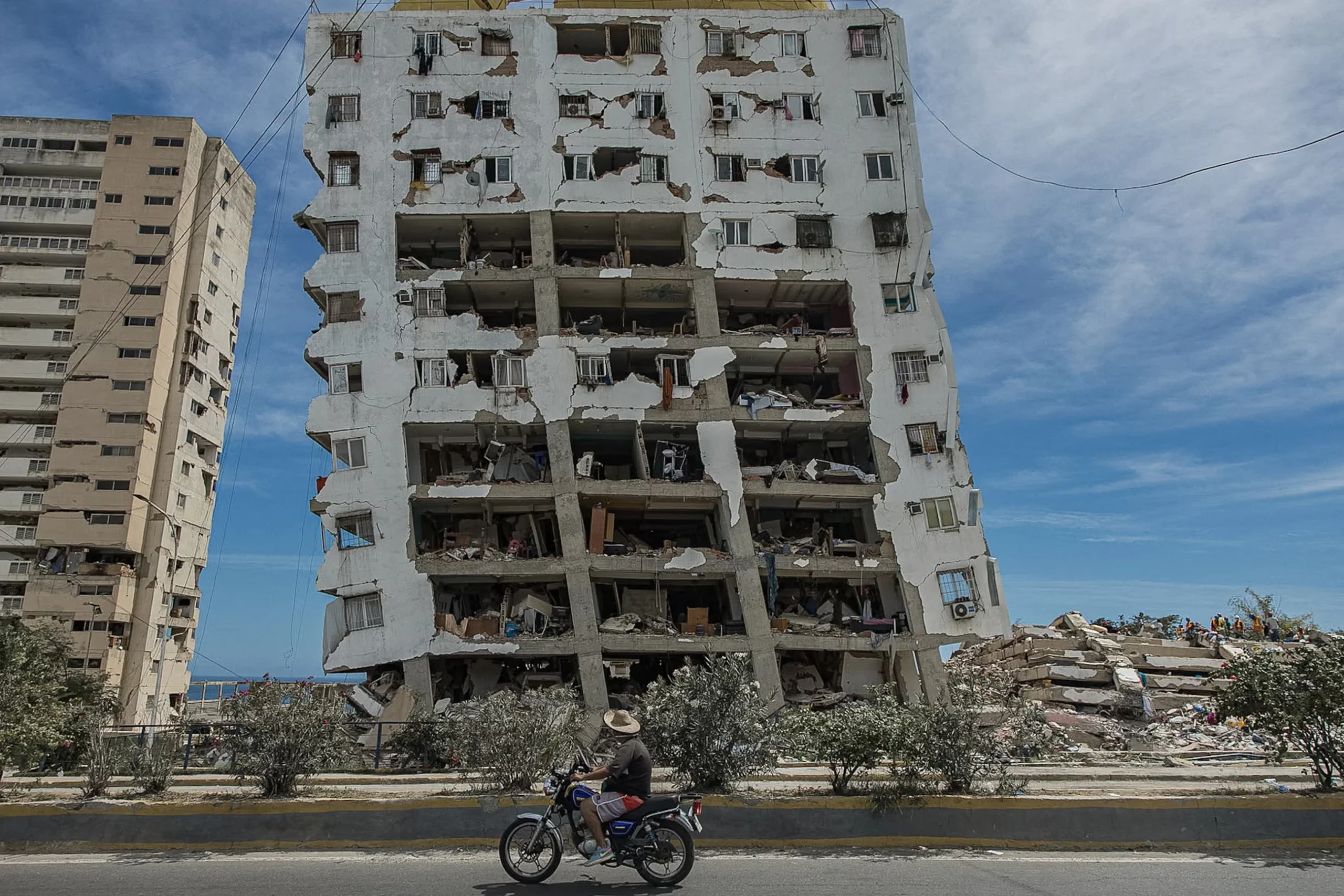
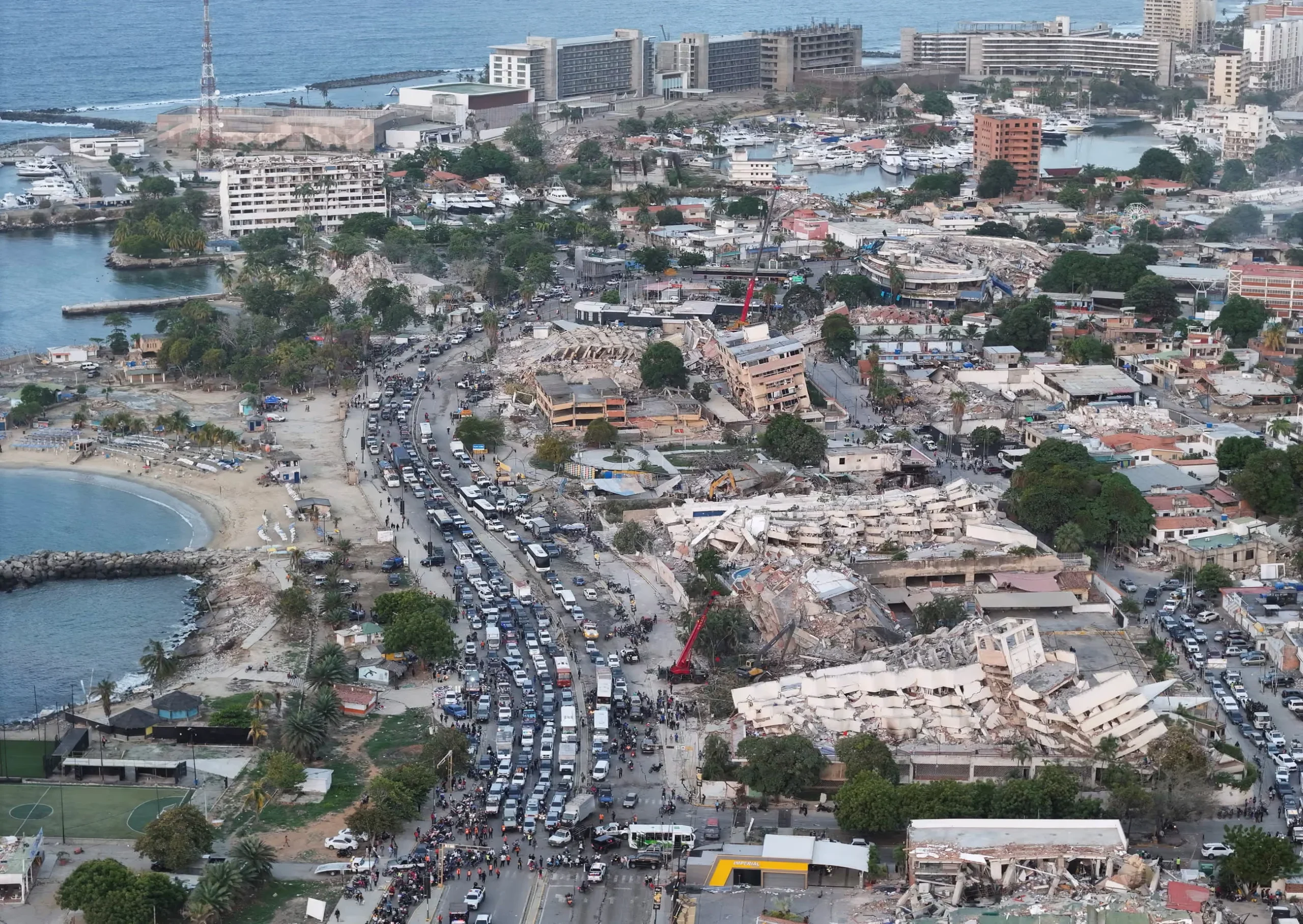
In Japan, torrential rain triggered flood warnings, severed transport links, and prompted evacuation advisories—another iteration of a disaster script the country knows intimately, yet one that infrastructure still cannot quite absorb. Meanwhile, a 7.2-magnitude earthquake reduced Venezuelan towns to rubble, killing at least 188 and injuring over 1,500, a toll that speaks less to the force of nature than to the long-standing failure of building standards and planning enforcement.
The question these events raise is not speculative. It is overdue: how can urbanism and architecture stop performing resilience and actually deliver it?
Invention of the 20th Century: A Gift to Architecture
Consider passive survivability and off-grid redundancy: two concepts now fashionable in resilience discourse yet persistently undermined in practice. As Philip Will Jr. declared in 1956, “the greatest step made recently in controlling the environment is the invention and development of air-conditioning,” admitting that its impact on planning was “only beginning to be felt.” Seven decades later, the impact has been devastating. Mechanical conditioning became not a supplement to climate-responsive design but a substitute for it, licensing an architecture stripped of thermal mass, cross-ventilation, and shading—features that vernacular builders once understood as non-negotiable.
The result is a stock of non-functional hybrid buildings: sealed boxes rendered unlivable the moment the grid fails or energy prices spike. When people now refuse or cannot afford to run mechanical systems, the space does not revert to passive performance; it simply fails. That is not resilience. That is a glass facade masquerading as shelter.

Heat: Europe’s New Normal
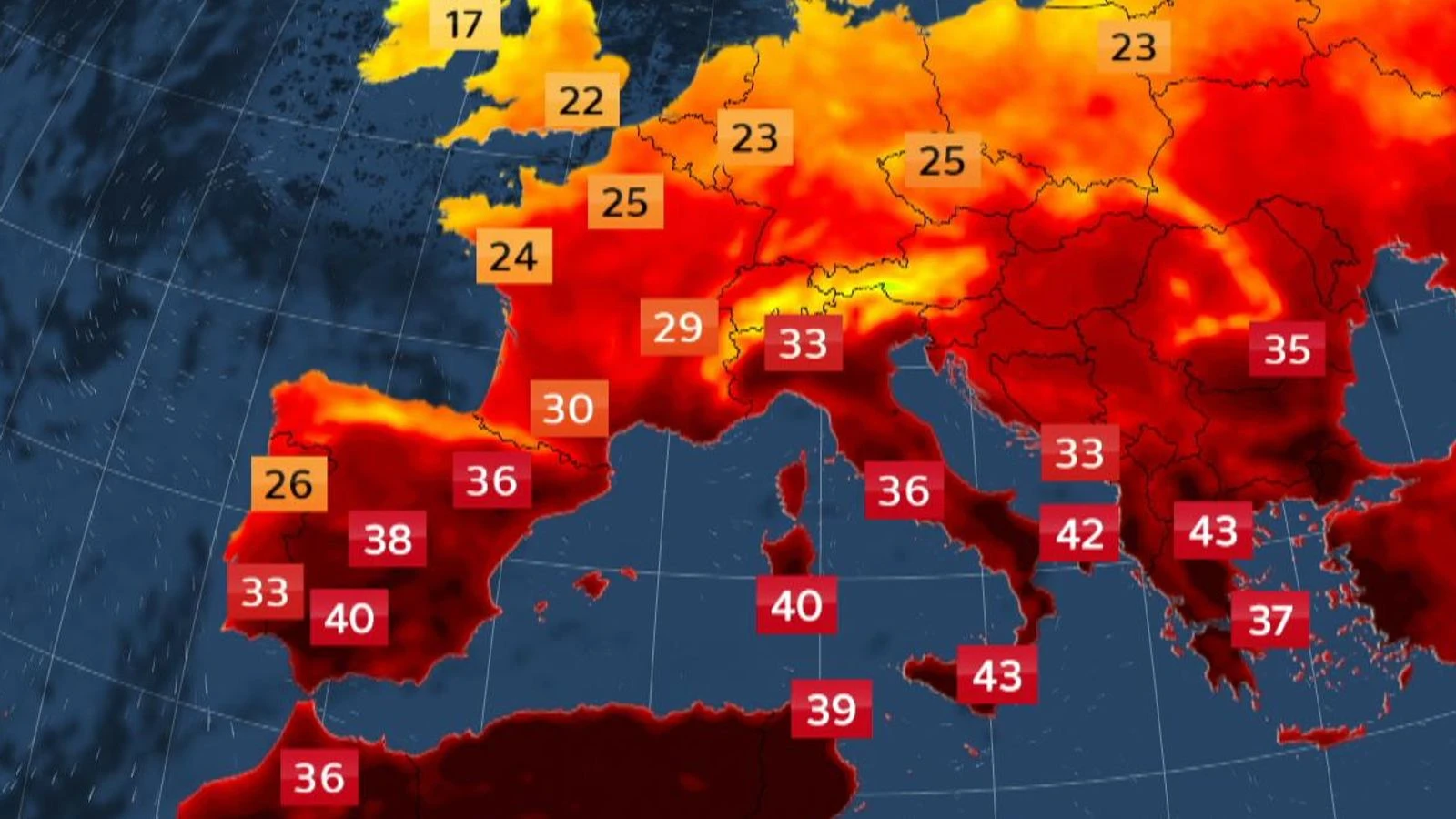
Temperatures across Europe have now topped 44 degrees Celsius, with at least 130 million people facing readings of 35°C and above in a single day; And this has nothing to do with El Niño. Officials have explicitly ruled out the Pacific warming pattern as a contributing factor, noting that its peak (and the global temperature record it is expected to drive in 2027) still lies ahead. The message is unmistakable: this heat is not an anomaly. It is the baseline.
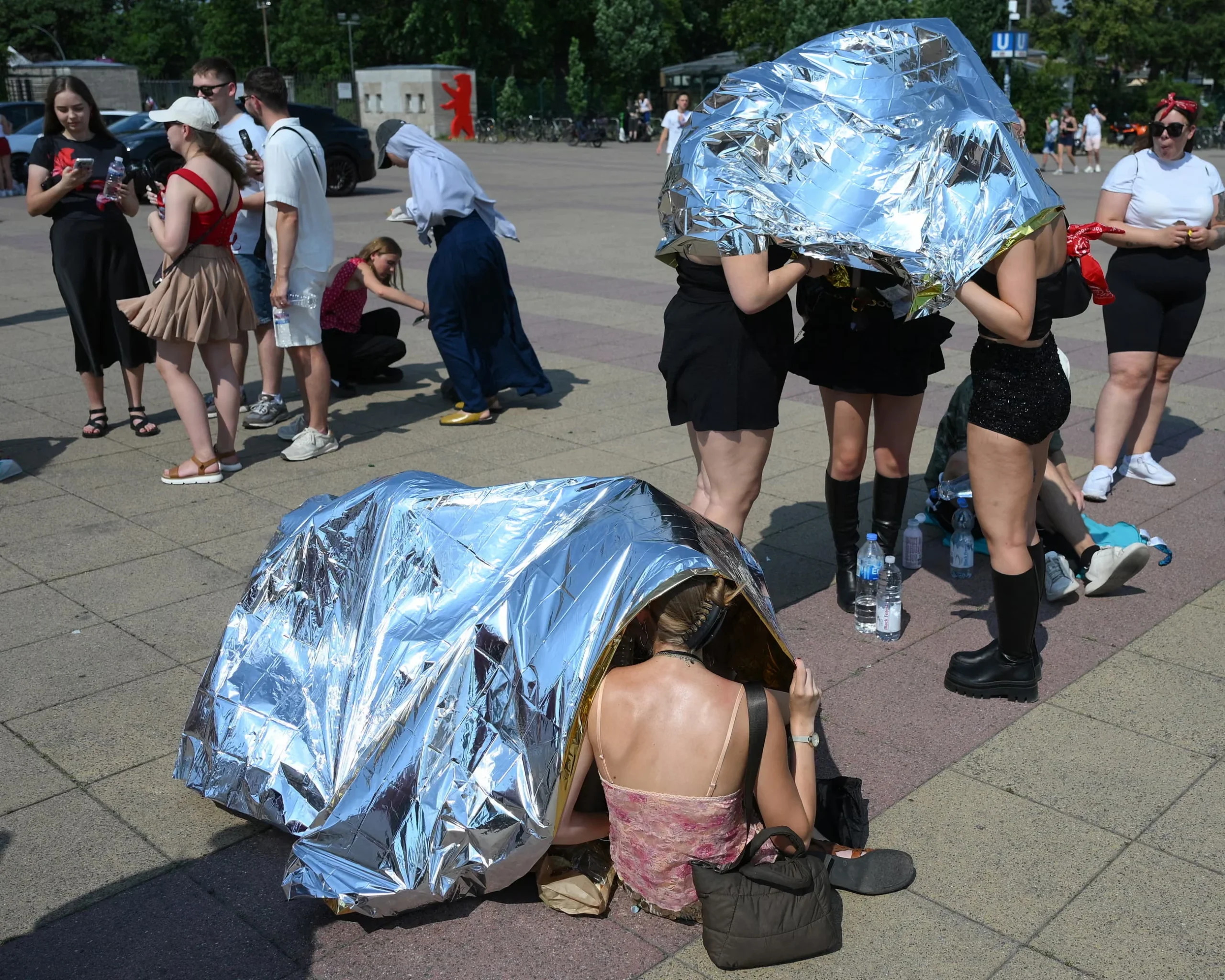
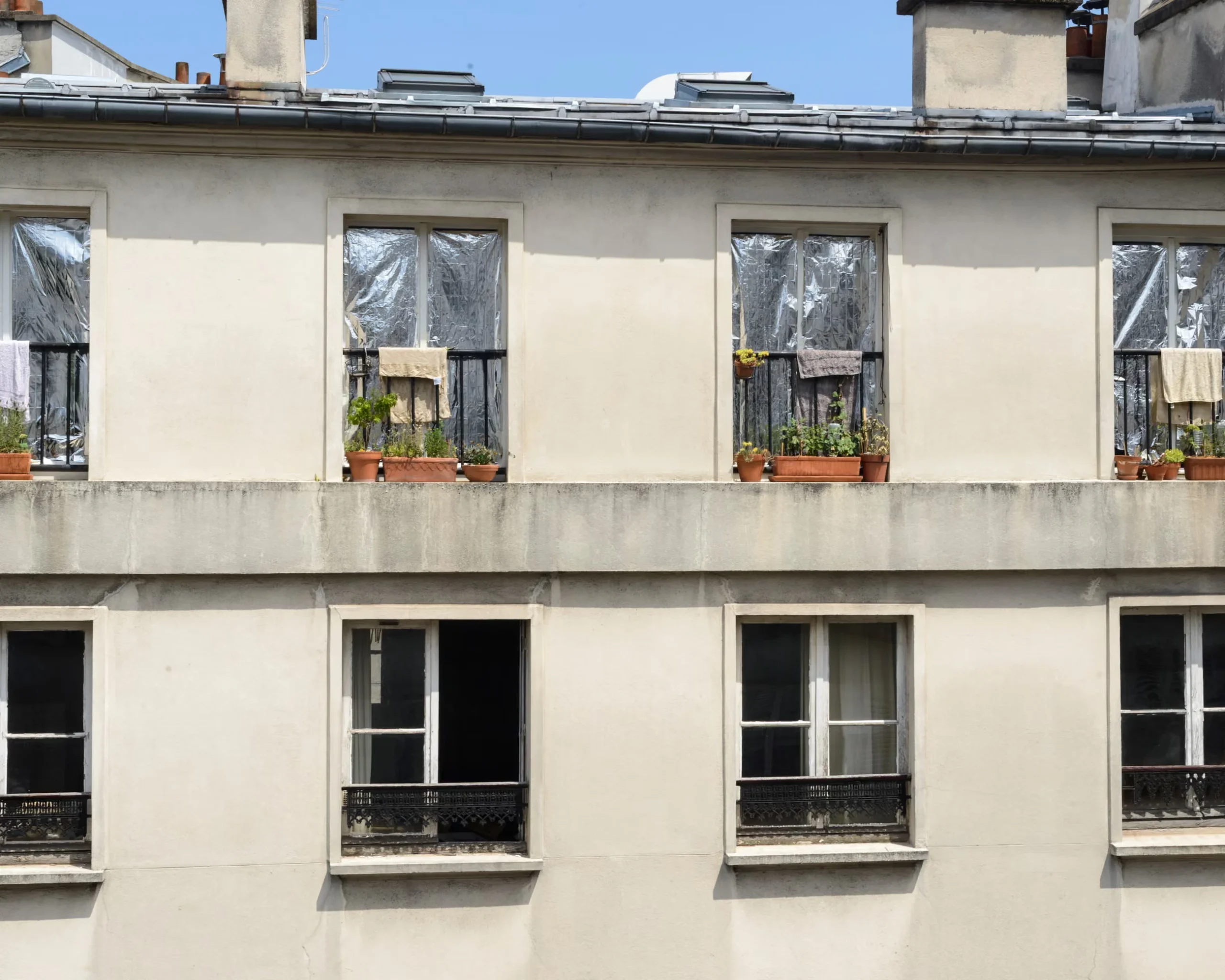
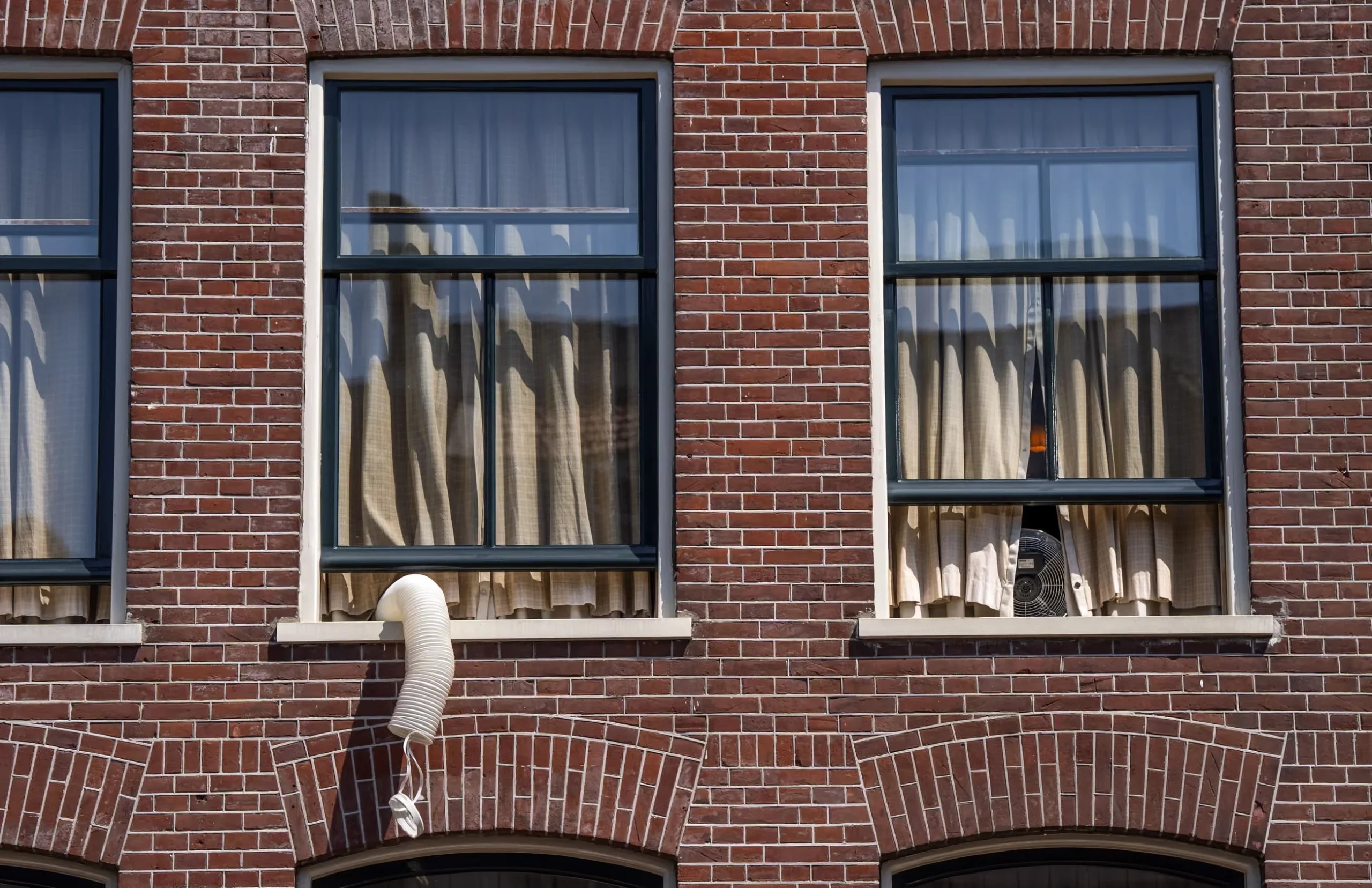
What, then, does architecture offer? A scramble of ad-hoc adjustments. Glowing aluminum sheets taped to windows. Cooling units bolted onto buildings were never designed to accommodate them. Temporary fixes layered onto permanent structures, as if resilience could be retrofitted from the outside in. The variation in architectural response is already visible, but it remains superficial: a repertoire of reactions rather than a coherent strategy.
And here lies the deeper problem. Unlike cold, which demands the very fabric of a building to perform (insulation, thermal mass, and airtightness), extreme heat is too often treated as an equipment problem: A mechanical one. Add air-conditioning, the logic goes, and the issue is solved. But this reliance on active systems merely defers the crisis.
It increases energy loads on grids already strained by the very heat they are fighting. It makes survivability contingent on uninterrupted power and the ability to pay for it. It produces buildings that are not truly adapted to their climate, only artificially shielded from it, until the system fails, or the fuel becomes too expensive, or the outdoor temperature climbs so high that even the machinery cannot keep pace.
If 44°C is the new normal, then bolting aluminum to glass will not suffice. The question is not what equipment can be added but whether architecture is willing to fundamentally rethink form, material, and orientation to treat heat as a design problem, not a procurement one.
Flood in the Land of Sunshine
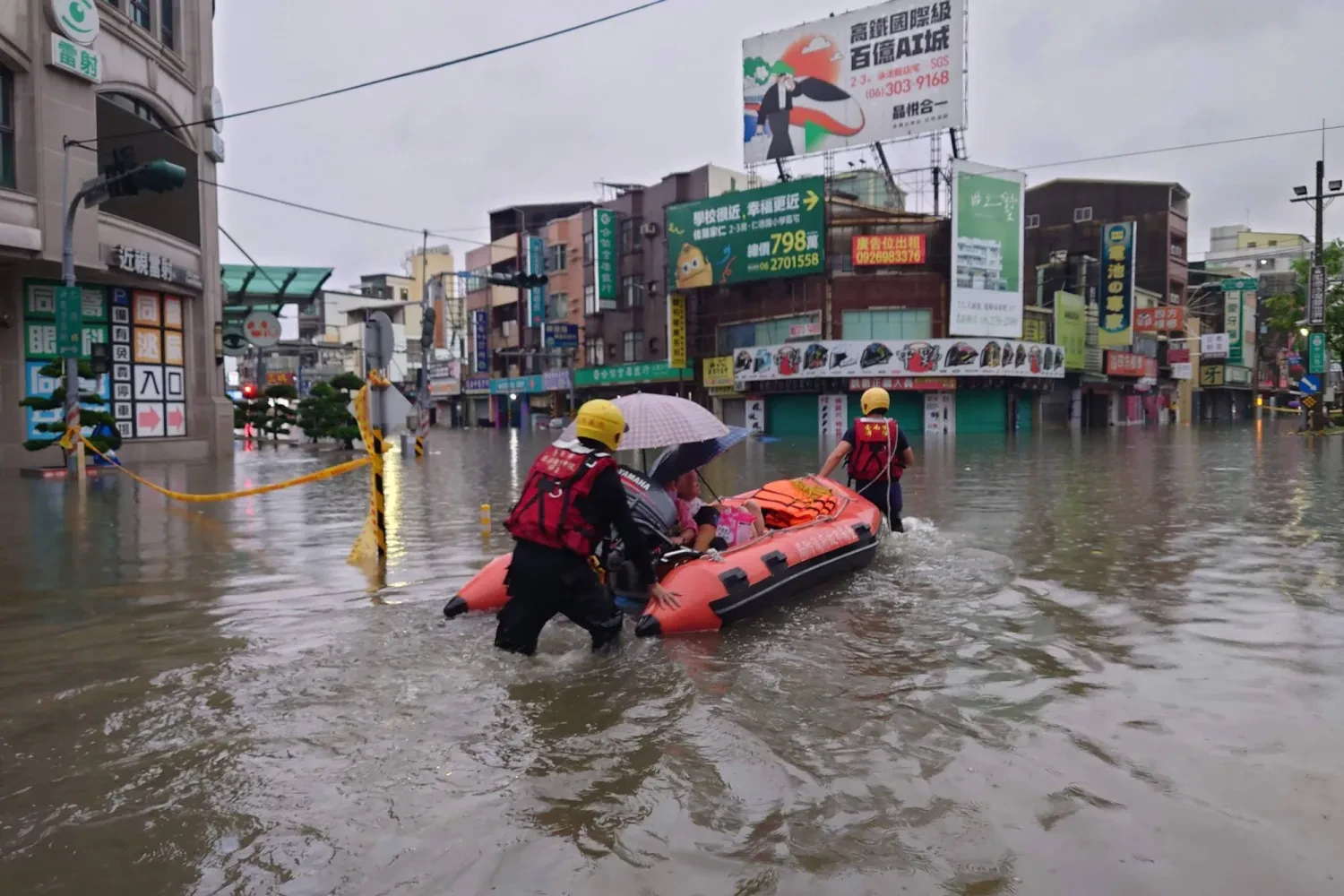
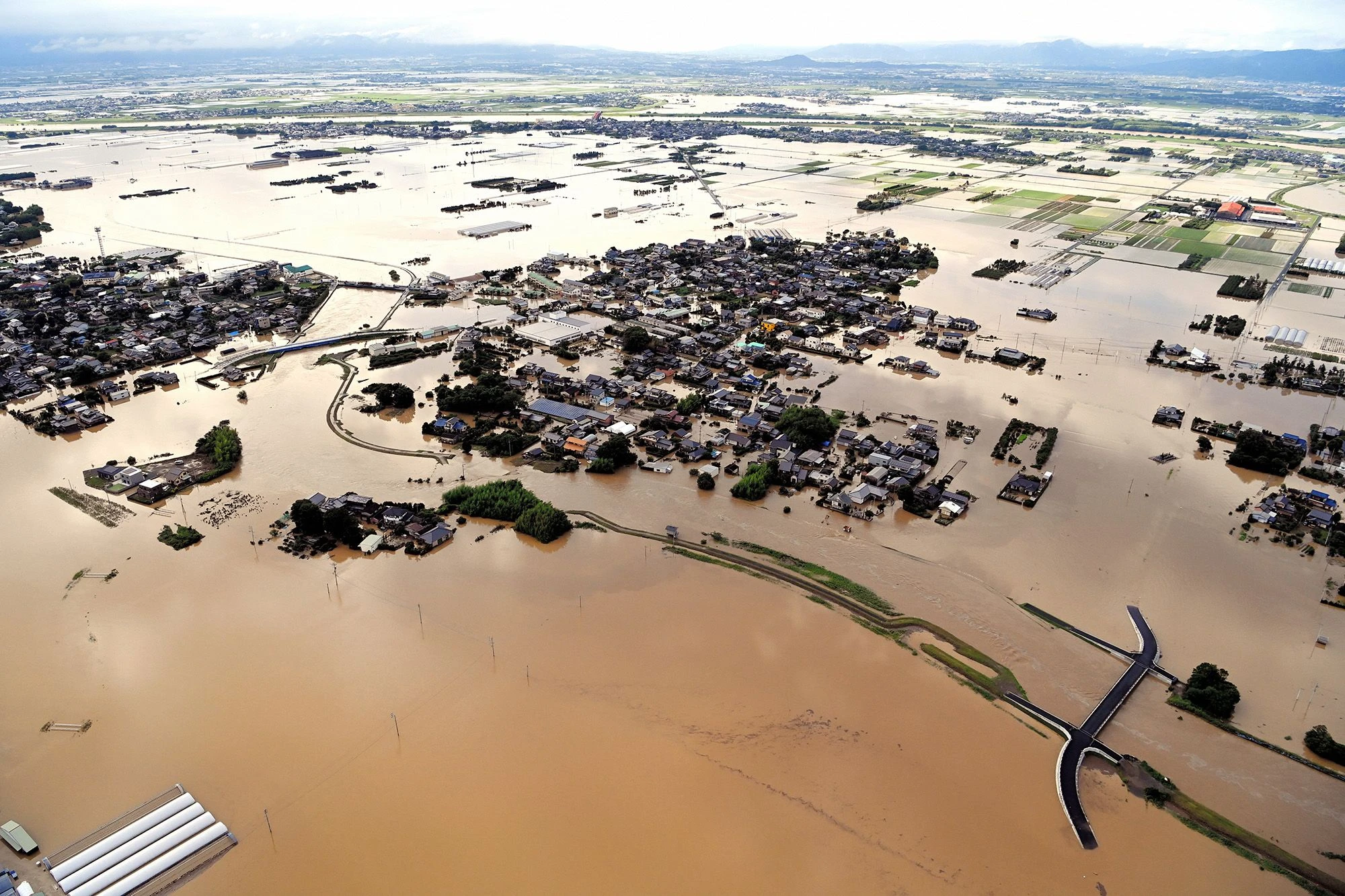
The phrase “land of sunshine” carries a quiet irony now. Japan, a nation whose disaster preparedness is envied globally, found itself once again submerged by a script it knows intimately and yet cannot seem to escape. The seasonal Baiu rain front, a phenomenon as predictable as the monsoon, dumped over a month’s worth of rainfall in less than 24 hours across western Japan. Tropical moisture, dragged northward by a stalled weather front, unloaded torrential rains over two weeks. The result was not merely flooding but a cascade of failures: rivers breaching embankments, hillsides liquefying into mudslides, transport corridors severed, and entire communities placed under evacuation orders they had heard before.
This is not a story of meteorological surprise. The Baiu front arrives every year. Its behavior is studied, modeled, and anticipated. What has changed is not the rain’s existence but its intensity, a shift climate science has been projecting for decades and which Japanese authorities have acknowledged in white papers and planning documents. The gap, then, is not between prediction and event. It is between knowledge and construction.
Developing Cities, Ignoring Nature
The infrastructure meant to contain these rains, levees, drainage networks, and dam systems, was calibrated against historical averages that no longer hold. Each flood rewrites the statistical baseline that the last retrofit was built to meet. The result is a perpetual lag: infrastructure designed for yesterday’s storms, overwhelmed by today’s, and hopelessly inadequate for tomorrow’s.
Yet the failure runs deeper than engineering. Japan’s post-war urbanization aggressively paved over floodplains, channeled rivers into concrete straitjackets, and built dense neighborhoods on land whose hydrological memory is of being wet. The landscape was not adapted to water; water was treated as an intruder to be expelled. This adversarial model (walling out, draining away, straightening and speeding up) works until it doesn’t. When it fails, it fails catastrophically. The same concrete channels that protect during normal rains become accelerants during extreme ones, shooting floodwaters downstream with a velocity that leaves no time for warning.
Concrete Over Context: The Ecology Erased by Development
There is a deeper cultural dimension as well. Japan’s relationship with water was once one of coexistence: rice paddies that doubled as retention basins, urban waterways that meandered rather than raced, and building typologies raised on stilts above anticipated flood levels. Much of this vernacular logic was erased by the modernist impulse toward control and standardization. What remains is a landscape caught between two paradigms: technological confidence on one side and ancestral prudence on the other, loyal to neither when the rain begins to fall.
If the land of sunshine is to endure its new deluges, it must relearn what it once knew: that resilience is not the strength of the wall but the intelligence of the floodplain. It lies in permeable surfaces that absorb rather than repel, in zoning that retreats from the river’s edge rather than hardening against it, and in infrastructure designed not to conquer water but to accommodate its inevitable return. The question posed by western Japan’s inundation is not whether the next Baiu front will arrive. It is whether the built environment will finally greet it with humility instead of hubris.
Earthquake in Venezuela: A Familiar Disaster, An Avoidable Toll
What struck northern Venezuela on that Wednesday was not a single earthquake but two: a magnitude 7.2 rupture followed, just 39 seconds later and five kilometers away, by a magnitude 7.5. The seismic violence was compounded by its brevity of interval; structures barely had time to absorb the first shock before the second arrived. The toll was devastating: at least 900 dead, thousands injured, and widespread building damage across the region. The numbers, staggering as they are, do not tell the full story. They are not merely measurements of seismic force. They are an indictment of the built environment that translated ground motion into mass casualties.
Venezuela sits squarely on the boundary between the South American and Caribbean tectonic plates. Seismic activity here is not an aberration; it is a geological certainty. The historical record confirms this with brutal regularity. The Earth’s behavior is consistent. What remains inconsistent is the human response; specifically, the political will to enforce building standards that could absorb these predictable shocks.
The phrase “earthquakes don’t kill people; buildings do” has become a cliché in disaster discourse, yet it persists because it remains true. In Venezuela, as in much of the developing world, the difference between a seismic event and a humanitarian catastrophe is constructed, quite literally, brick by brick. Unreinforced masonry, informal construction, absent or unenforced building codes, corruption in materials procurement, and the economic desperation that drives families to build on unstable slopes or in poorly engineered structures—these are not natural factors. They are social, economic, and political ones, embedded in the very walls that collapse.
This is the uncomfortable distinction that disaster reporting often elides. An earthquake is a natural phenomenon. The deaths it causes are man-made. They are the result of decisions: to build quickly rather than safely, to waive inspections rather than enforce them, to prioritize cost over resilience, and to ignore vernacular seismic knowledge in favor of cheap modern materials. In Venezuela, where economic crisis has hollowed out state capacity and driven informality to new extremes, these decisions have accumulated over decades into a landscape of latent vulnerability, a built environment waiting to fail the moment the ground moves.

Designing for the World That Has Already Arrived
The disasters of 2026 do not belong to separate categories (heat, flood, and earthquake) as if they were isolated misfortunes requiring distinct, compartmentalized solutions. They are expressions of a single, systemic failure: a built environment conceived for a planetary condition that no longer exists and may never have existed in the first place. In Europe, the sealed glass tower that demands air-conditioning to remain habitable is the same logic that paves over Japan’s floodplains and pours unreinforced concrete in Venezuela’s seismic zones. It is the logic of universal templates applied to specific ecologies, of mechanical override substituting for environmental intelligence, and of construction treated as an act of dominion rather than an act of negotiation with place.
What summer 2026 demonstrated, across three continents simultaneously, is that this logic has exhausted itself. The climate it assumed (stable, predictable, and forgiving) is gone. In its place is a climate of thresholds: temperatures at which equipment fails, rainfall intensities at which walls give way, and ground motions at which poorly built structures become tombs. Architecture and urbanism cannot wish this new climate into compliance with old building codes. They can only adapt, fundamentally and without nostalgia, to the world that has already arrived.
The question is no longer whether such adaptation is affordable, convenient, or politically easy. It is whether the professions responsible for sheltering human life are prepared to take that responsibility seriously before the next summer delivers verdicts even less forgiving than this one.