



In an effort to create intelligent and automated spaces for residential, commercial, and corporate usage, an increasing number of buildings are designed, constructed, and remodeled in accordance with the concepts of smart buildings. This form of intervention relies heavily on the Internet of Things (IoT). The IoT’s ability to connect all systems facilitates the collection of a large amount of data that can be used to make informed decisions. IoT and cloud technology manage and control building systems, improve efficiencies, enhance safety, and promote sustainability and cost savings.
Smart Buildings have become increasingly important in today’s world for several reasons. Firstly, buildings consume a significant amount of energy and contribute to global carbon emissions. According to the International Energy Agency, buildings account for 30% of global energy consumption and around one-third of global energy- and process-related CO2 emissions. Smart Buildings can help reduce this impact by optimizing their energy consumption and using renewable energy sources.
Secondly, the comfort and well-being of occupants are crucial for productivity and health. Smart Buildings can provide a comfortable and healthy indoor environment by regulating temperature, humidity, lighting, and air quality. They can also enhance security and safety by using intelligent surveillance and access control systems.
For a building to be ‘smart’, it needs to have a holistic system of integrated hardware, such as sensors and gateways, that make building functions smart via real-time data transfer, two-way communication, and automation.
1st Generation Smart Buildings: Focused on efficient infrastructure facility management perspective.
2nd Generation Smart Buildings: Added conveniences to occupants and owners driven by the rise of IoT devices and associated technologies.
3rd Generation Smart Buildings: Transforming buildings into responsive, automated, sustainable, health-conscious ecosystems driven by IoT platforms.

Understanding IoT’s Role in Smart Buildings
Integrating IoT devices and artificial intelligence (AI) algorithms in smart buildings allows for unprecedented levels of control and automation. Sensors distributed throughout a building collect data on temperature, humidity, occupancy, and light levels, among other variables. AI algorithms then analyze this data to make informed decisions about adjusting the building’s systems to meet energy efficiency goals and occupant needs. For example, lighting can be dimmed or turned off in unoccupied rooms, and HVAC systems can adjust the temperature in real time based on the number of people in a space and the external weather conditions.
IoT smart buildings provide a unified management framework for a variety of smart building services, simplifying oversight and better-coordinating responses. IoT devices can include:
- Smart sensors that collect and transmit data securely back to the central network
- Automated mechanisms for environmental controls
- Security-related devices such as automatic door locks and badge readers

The network of sensors that are created could, therefore, be seen as a kind of nervous system of our “living” building. Nevertheless, what are the steps to develop this nervous system? In order for a building to become IoT smart building, key components that interact and communicate with each other must be considered:
Real-time data analytics
Real-time data gathering and analytics make up a smart building’s DNA. This information is extremely valuable in helping facilities managers and decision-makers determine which courses of action to take. The raw data collected throughout the building via sensors and other devices help you quickly understand and unpack user behaviors, identify patterns, and anticipate threats.
Wireless communications
The advancement of wireless communications has been critical to making buildings smarter. This technology enables real-time collaboration and data sharing in a way that is relatively easy and inexpensive to implement.
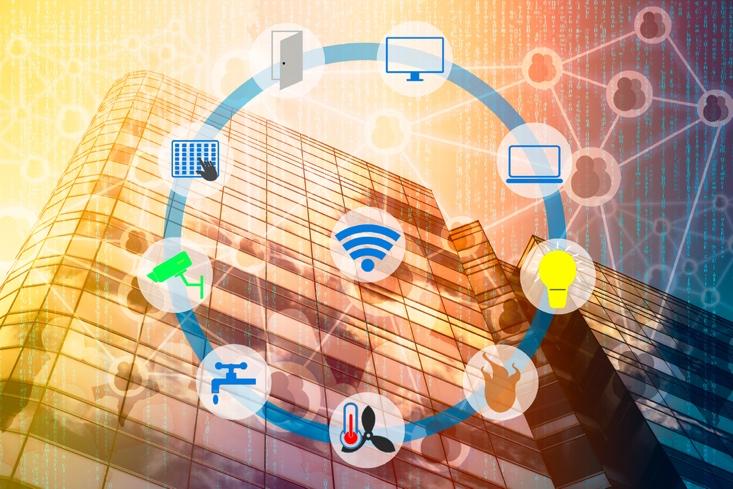
User interface
Simple user interfaces help people to make sense of complicated or information-heavy data. A smart building solution will incorporate a central data collection, analytics, reporting, and management dashboard that presents information in meaningful and actionable ways. Taking this one step further, IoT smart building software can embed personalization based on an individual user’s behavior, which enhances their experience even further and provides the opportunity to make manual adjustments.
IoT Applications in Smart Buildings
- Smart heating, ventilation, and air-conditioning (HVAC) systems, including controllers and potentially smart peripheral devices, affording control at the level of a single device or room. The components of HVAC systems can also be deployed separately, for instance, as standalone smart heating systems or smart ventilation systems.
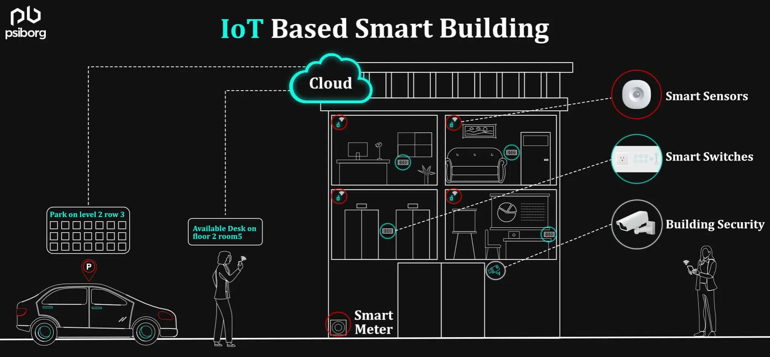
- Building safety and security, including smart connected security alarms and fire alarms. It also includes connected video cameras used by enterprises for building security.
- Access control, including monitoring whether doors and windows are open or closed, monitoring shop windows for breakage events in a retail context, and a range of vibration-monitoring-based movement sensors.
- Building lighting including the monitoring and control of interior and exterior building lighting systems.
- Monitoring air quality, including carbon monoxide and carbon dioxide levels, moisture levels, and various contaminants such as harmful chemicals, particulate matter, etc.
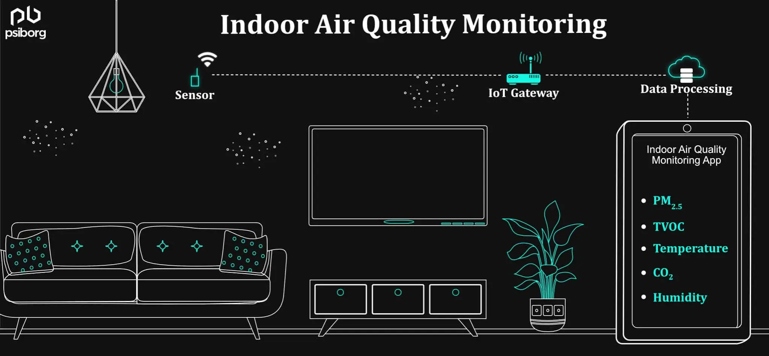
- Building automation, including controllers and peripheral devices (monitoring devices, controlled devices, or actuators) to support an extended range of automated functionality, such as the control of window shades.
- The monitoring of water flow and water storage in plumbing systems, potentially for multiple reasons, including leak detection to prevent flooding and also to guard against the development of legionella in hot water pipelines.

- Monitoring specific building resources such as elevators, parking spaces, and renewable generation assets. Also, potentially monitoring electricity consumption at the level of an individual asset or machine.
- Monitoring of shared restrooms, including, for example, soap dispensers, to provide alerts in the case that supplies run low.
Benefits of IoT
1. Improved building energy efficiency and sustainability: smart buildings can significantly reduce energy consumption and costs by optimizing their operations and using renewable energy sources. According to a study by the American Council for an Energy-Efficient Economy, Smart Buildings can save up to 15-30% of energy costs compared to traditional buildings.
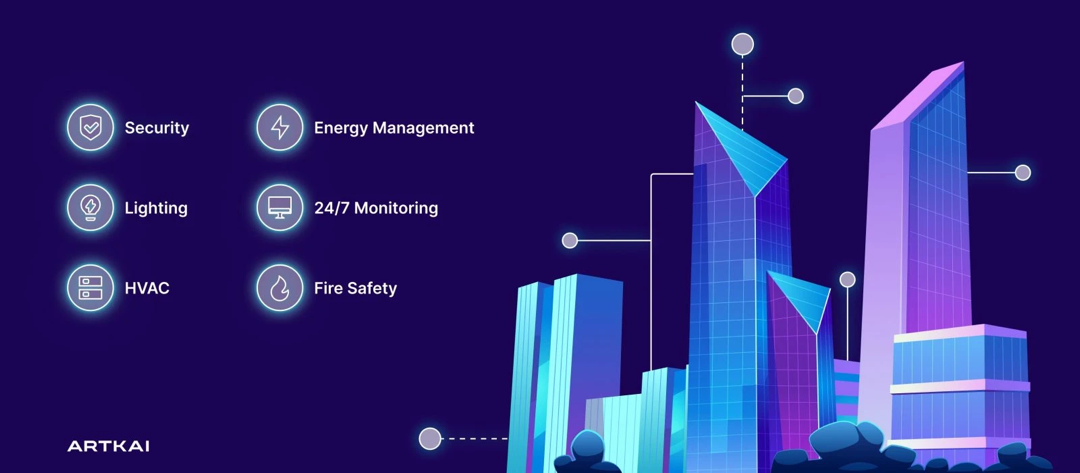
2. Reduced maintenance costs with predictive maintenance, smart buildings can generate cost savings through reduced maintenance costs and increased asset lifespan. By using predictive maintenance and condition monitoring, smart buildings can detect and fix issues before they become major problems, thereby reducing maintenance costs and extending the lifespan of building assets.
3. Optimized use of space, smart cameras, and motion sensors can display the availability of meeting rooms, desks, or parking spaces on a dashboard or mobile app.
4. Enhanced tenant security, comfort, and safety: smart buildings can enhance safety and security by using intelligent surveillance and access control systems. They can detect and respond to security threats in real-time and control access to different areas of the building based on user credentials.

5. Building owners can benefit from better-maintained buildings; smart buildings can provide a comfortable and healthy indoor environment by regulating temperature, humidity, lighting, and air quality. They can also enhance occupant well-being by providing features such as circadian lighting, which adjusts lighting levels based on the time of day to mimic natural light.
6. Facilities Managers can benefit from a plethora of information relating to the condition of the building that they manage. This could range from the status of access doors to the condition of assets, facilities, and equipment within the building, the condition of fire alarms, and fire suppression systems.
Smart Building Examples
Several pioneering projects around the world exemplify the integration of smart technology with eco-friendly design.
THE EDGE

Location: Amsterdam, Netherlands
Type: Office Building
Area: 40,000 sq. meters
Architects: London-based PLP Architects
Year: 2014
The Crystal
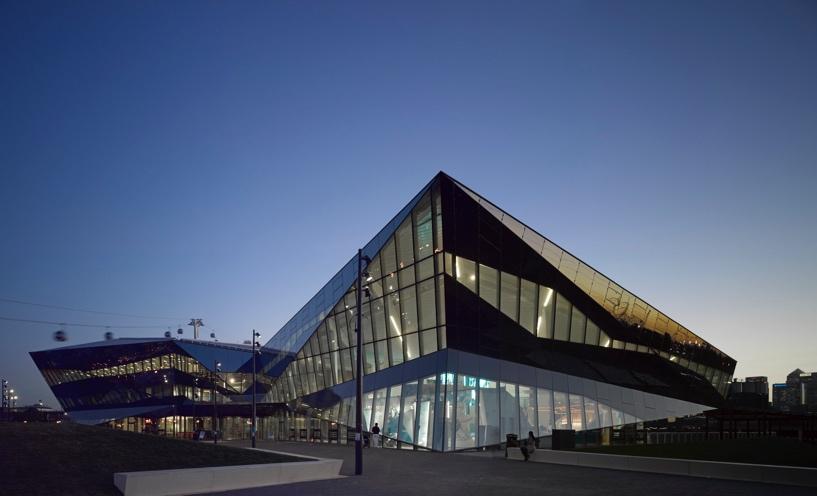
Location: London, UK
Type: Exhibition Center
Area: 22,300 sq. meters
Architects: Wilkinson Eyre Architects
Year: 2012
Powerhouse Telemark
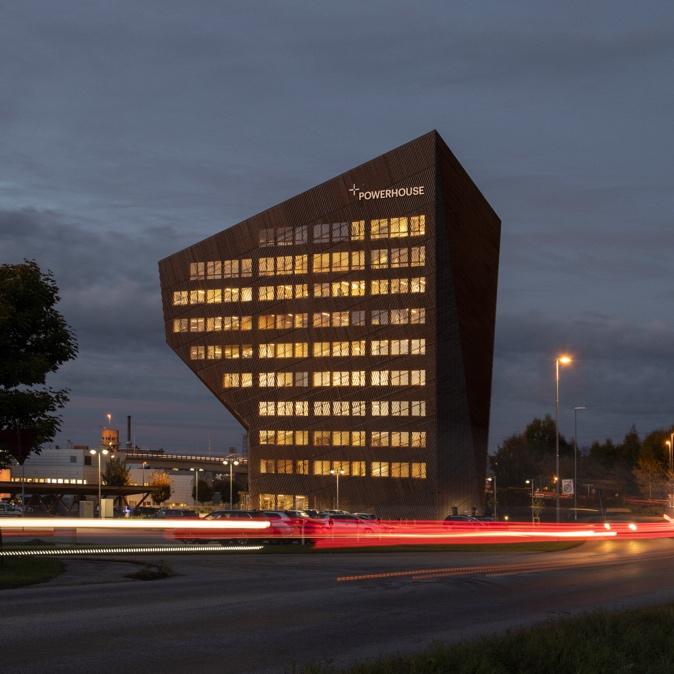
Location: Norway
Type: Office building
Architects: Snohetta
Area: 7931 sq. meters
Year: 2020
Duke Energy Center

Location: NC, United States
Type: Office building
Area: 127,297.0 sq. meters
Architects: TVsDesign
Year: 2010
BURJ KHALIFA, DUBAI

Location: Burj Khalifa Park by Emaar
Type: skyscraper
Area: 309,473 sq. meters
Architects: Adrian Smith, George J. Efstathiou, Marshall Strabala
Year: 2010
We may anticipate a boom in smart building IoT as 5G networks develop and more intricate and advanced IoT applications emerge. As the IoT market matures, regulation will become increasingly important to assure the quality, compatibility, and security of devices and systems. It is not surprising that smart building solutions can benefit a wide variety of stakeholders, given the broad range of smart building applications and associated advantages. Owners, landlords, facility managers, service providers, and, of course, building occupants are among them. The advantages can also be extended to insurers, who can assist their clients in minimizing risks and reducing the severity of adverse events by utilizing IoT-enabled smart building solutions.
Learn with PAACADEMY: Attend workshops at PAACADEMY to learn from the industry’s best experts how to use advanced parametric design tools, AI in design workflows, and computational design in architecture!


