


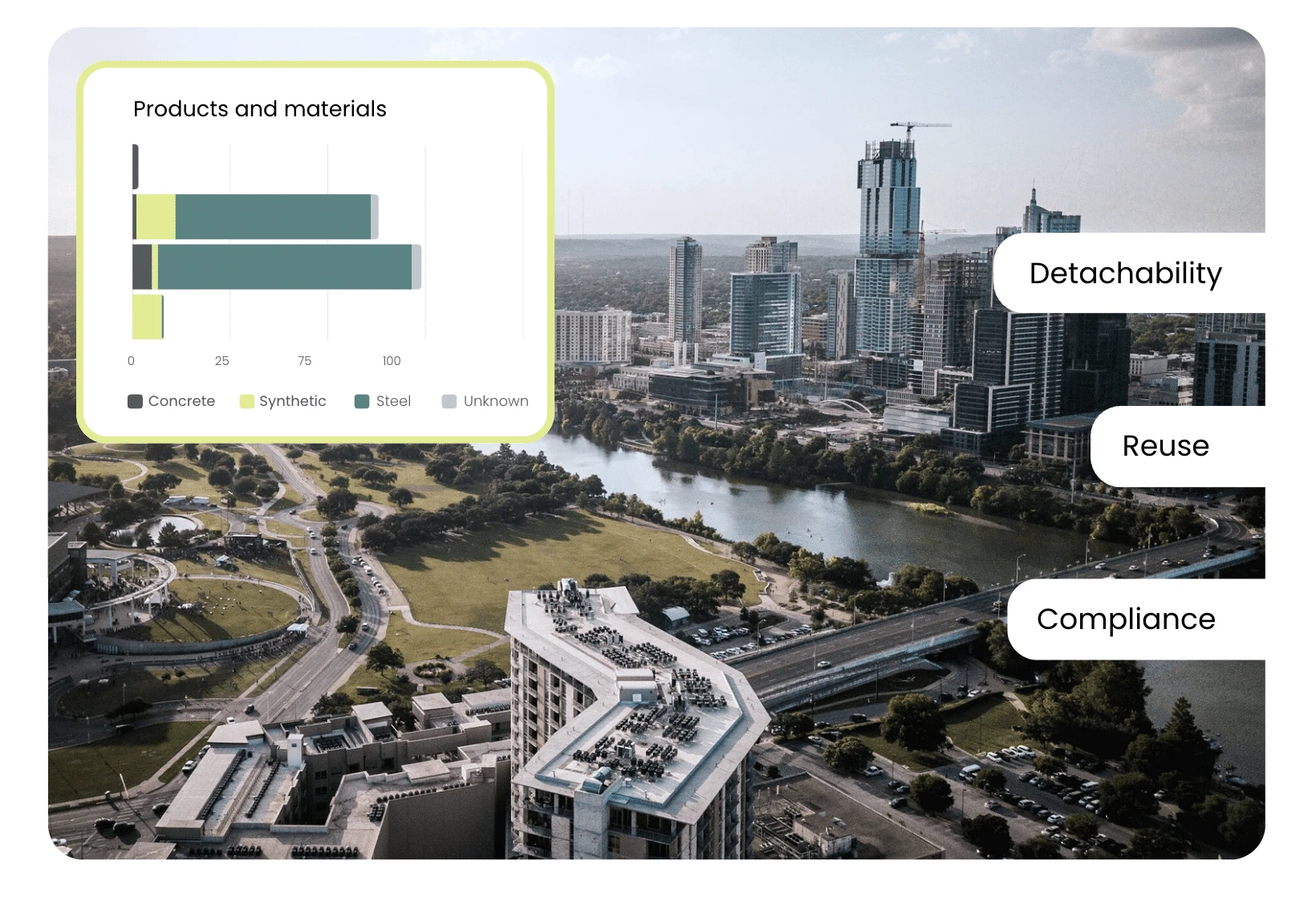
The construction industry has long operated on a linear model where materials are extracted, assembled into buildings, and eventually demolished, often ending up as waste. What is lost in this process is value. Energy, labor, and resources are embedded within every component, yet once a building reaches the end of its life, that value is rarely recovered.
Madaster, developed in the Netherlands, introduces a different way of understanding buildings. Instead of treating them as finished objects, the platform positions them as temporary repositories of materials. This idea, often described as buildings as material banks, shifts construction from a linear system to a continuous cycle of use, recovery, and reuse.
Rethinking the Building Lifecycle
One of the biggest gaps in construction is the lack of visibility. Once materials are built into a structure, they effectively disappear from any accessible system of knowledge. Decades later, when demolition begins, there is often little information available about what materials exist, in what quantities, or in what condition.
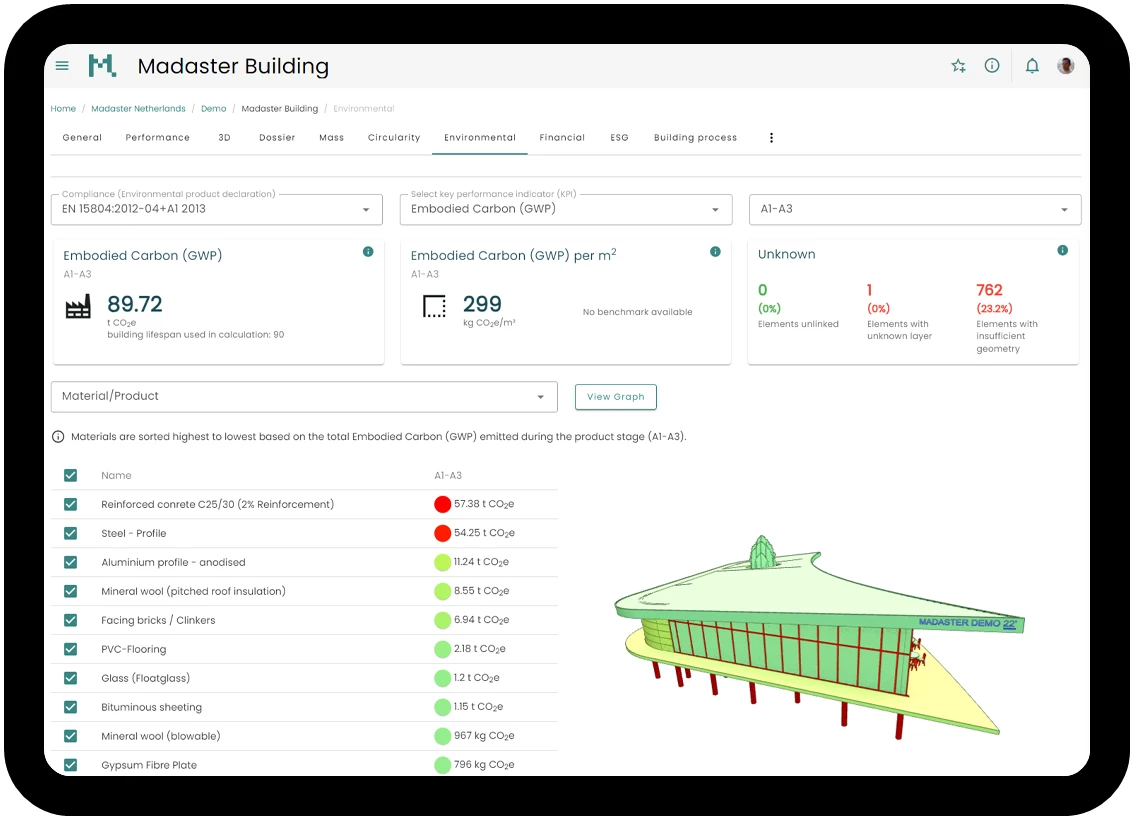
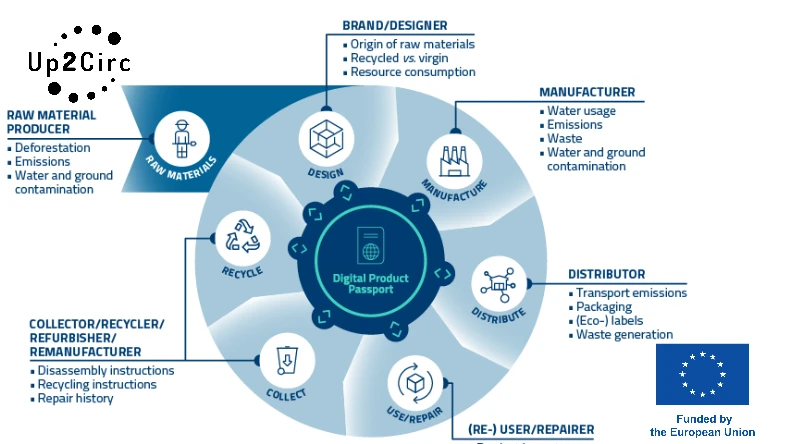
Madaster addresses this through material passports. These are digital records that document every component within a building. Each passport includes data on material type, origin, quantity, location within the building, and potential for reuse or recycling. This easily transforms the lifecycle of a building. Instead of ending in demolition, it becomes part of an ongoing system where materials can be identified, extracted, and reintroduced into new projects. The building no longer represents an endpoint, but it becomes a phase within a larger material cycle.
The Interface: Making Materials Visible and Actionable
The strength of Madaster lies not only in the data it collects, but in how that data is presented. At a project level, users interact with a dashboard that maps the building into layers. Structural systems, facades, interiors, and services can all be explored individually, where each layer is linked to detailed material data, allowing users to understand how the building is composed.
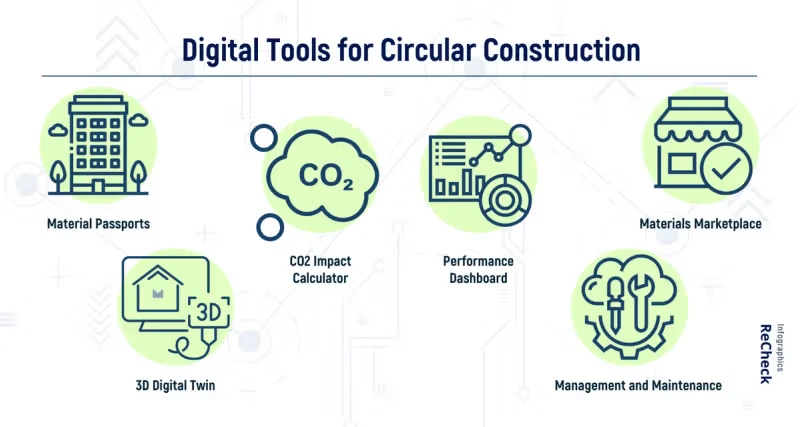
The interface provides key metrics such as total material quantities, environmental impact indicators, and the residual financial value of materials. Circularity scores help quantify how well a building aligns with reuse and recovery principles. These metrics are directly tied to the actual components within the project, making them practical.
Users can move between scales with ease. A designer can start with a building-wide overview and then zoom into specific elements such as a steel beam or a facade panel. Each component is associated with a material passport that can be searched, filtered, and compared. This makes the platform hands-on and an active design tool that informs decisions in real time. Instead of relying only on intuition, architects and engineers can evaluate materials based on measurable circular performance.
Integration with Existing Workflows
Madaster is designed to integrate with Building Information Modeling systems, allowing material data to be extracted directly from digital models. This reduces the need for manual data entry and ensures that information remains consistent throughout the design and construction process.
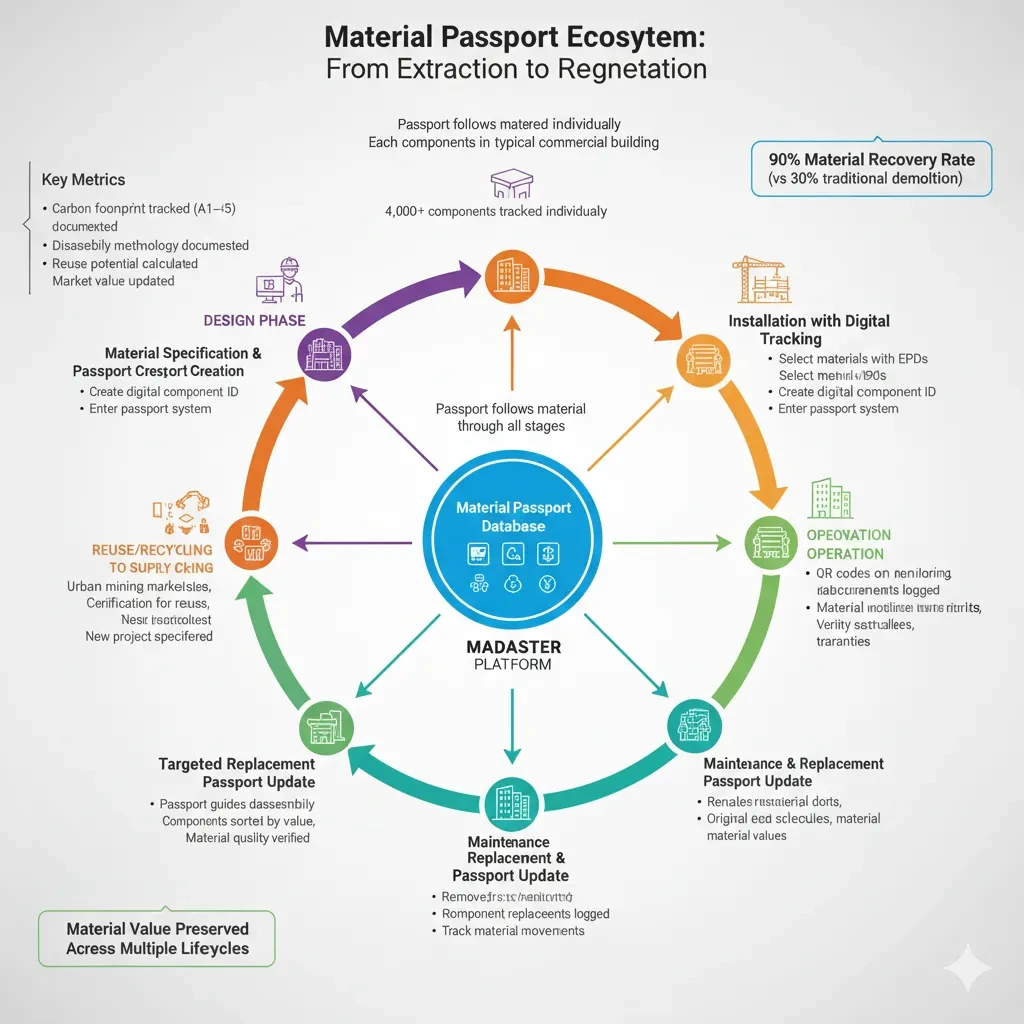
For architects, this means that circular thinking can be embedded from the earliest stages of a project. Material selection, detailing, and assembly methods can all be evaluated through the lens of reuse and disassembly. For contractors and developers, the platform provides clarity on material quantities and potential future value. Procurement strategies can be adjusted to prioritize materials that retain value over time. For deconstruction teams, Madaster offers a clear map of what exists within a building, and instead of approaching demolition blindly, they can plan the recovery of materials with precision.
Government Adoption and Policy Alignment
Madaster’s growth is closely linked to policy developments across Europe. The region has taken a proactive approach to circular construction, with regulations that emphasize transparency, resource efficiency, and waste reduction.

Initiatives such as the European Green Deal and the Circular Economy Action Plan encourage the use of digital product passports and the tracking of materials throughout their lifecycle. Madaster aligns directly with these goals by providing a platform for material documentation and analysis. Governments and public institutions are beginning to incorporate material passports into procurement requirements. Public buildings are increasingly expected to document their material composition, ensuring that future reuse is possible.
In countries like the Netherlands, where circular construction is a national priority, Madaster is part of a broader system that includes policy incentives, sustainability targets, and industry collaboration. This institutional support is essential for scaling circular practices beyond individual projects.
Europe’s Circular Construction Landscape
Europe has positioned itself as a leader in circular construction. High landfill taxes discourage waste disposal, while regulations promote reuse, recycling, and design for disassembly. Within this context, Madaster functions as a connecting layer. It links design, construction, and policy through a shared system of material data. Architects, engineers, developers, and policymakers can all operate within the same framework, improving coordination and efficiency.
The platform is also expanding across multiple countries, including Germany, Switzerland, and Norway. As more projects are registered, the database grows, increasing its value as a resource for the industry.
From Demolition to Disassembly
Traditional construction relies on permanent connections such as adhesives and welded joints, which make it difficult to separate materials without damage. Madaster challenges this by documenting materials and their connections, encouraging the use of mechanical systems that allow components to be taken apart.
This shift has direct implications for architecture. Buildings begin to be treated as assemblies rather than fixed objects. Layers such as structure, facade, and interiors can function as independent systems that can be replaced, upgraded, or reused over time. As a result, buildings become more adaptable, and their materials remain in circulation instead of ending as waste.
Madaster also reframes how materials are valued. Instead of losing value once installed, components are assigned a residual value based on their reuse potential. This introduces a new financial logic where buildings are not seen as depreciating assets but as repositories of future resources. Developers and investors can factor in long-term material value, while secondary markets for reclaimed materials become more viable through documented and traceable components.
A System in Transition
Madaster reflects a broader shift in how architecture and construction are understood. By making materials visible and measurable, it transforms buildings from static compositions into dynamic systems that evolve. Design decisions are no longer based only on immediate performance but also on long-term impact and future reuse. At the same time, the platform operates within a larger industry transition shaped by environmental pressures, resource constraints, and regulatory frameworks. It connects data, design, and policy, enabling circular construction to move beyond theory and into practice.
Its impact depends on scale. It needs wide adoption by designers, contractors, and policymakers, while data standardization and workflow integration are still ongoing challenges.
Image credit: Madaster
